METER READINGS, EXPLAINED
Estimated electric meter reading: what should you check?
BillMellow Editorial · Updated November 8, 2026
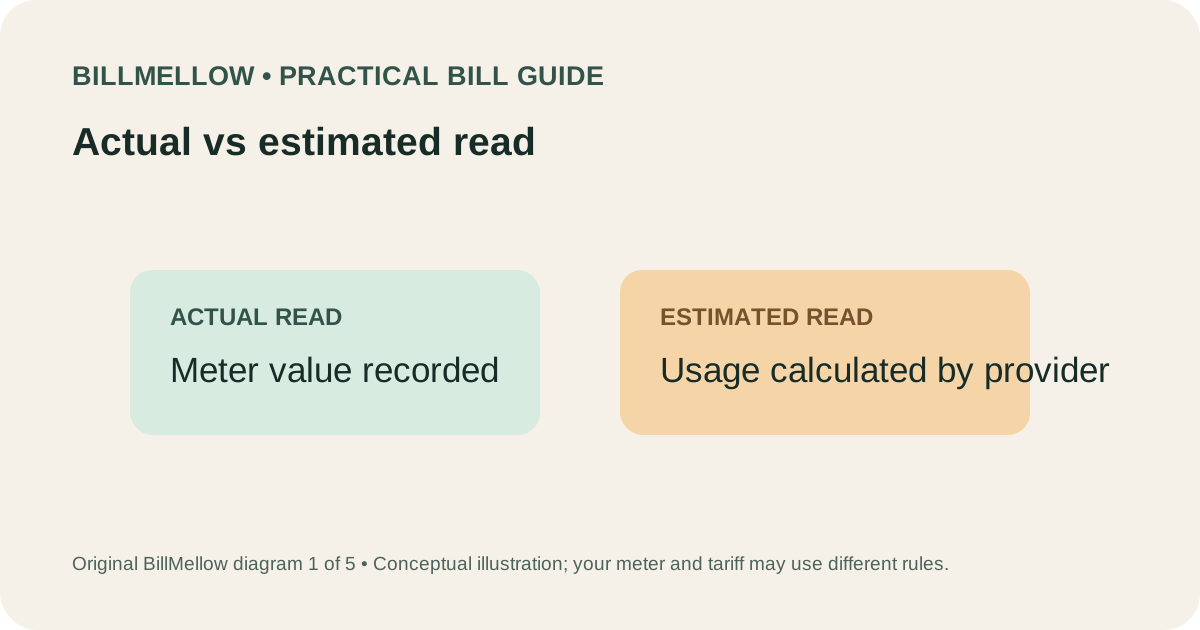
An estimated electric meter reading is a calculated value used when the utility does not have an actual meter read for that billing period. It is not automatically an error, a hidden fee, or proof that the meter is broken. It means the kWh on the statement may not come from a direct read taken at the period boundary. The provider should be able to explain the method and how later readings are reconciled.
The U.S. Energy Information Administration says billing-period consumption is usually calculated from the difference between meter readings at the start and end of a period, but consumption is occasionally estimated. Practices, labels, adjustment rules, and customer rights vary by utility and jurisdiction. Use this page to organize a review, then ask your provider about the account-specific calculation.
Find the read type and dates first
Look near the meter-reading detail or usage summary for wording such as “actual,” “estimated,” “customer read,” “smart meter,” “read type,” or an abbreviation defined elsewhere on the bill. The label may apply to one endpoint, a whole billing cycle, or a particular meter. Record the service dates, start and end readings, total kWh, number of days, meter identifier, and any adjustment or note. Avoid sharing an unredacted bill because it can include account and address information.
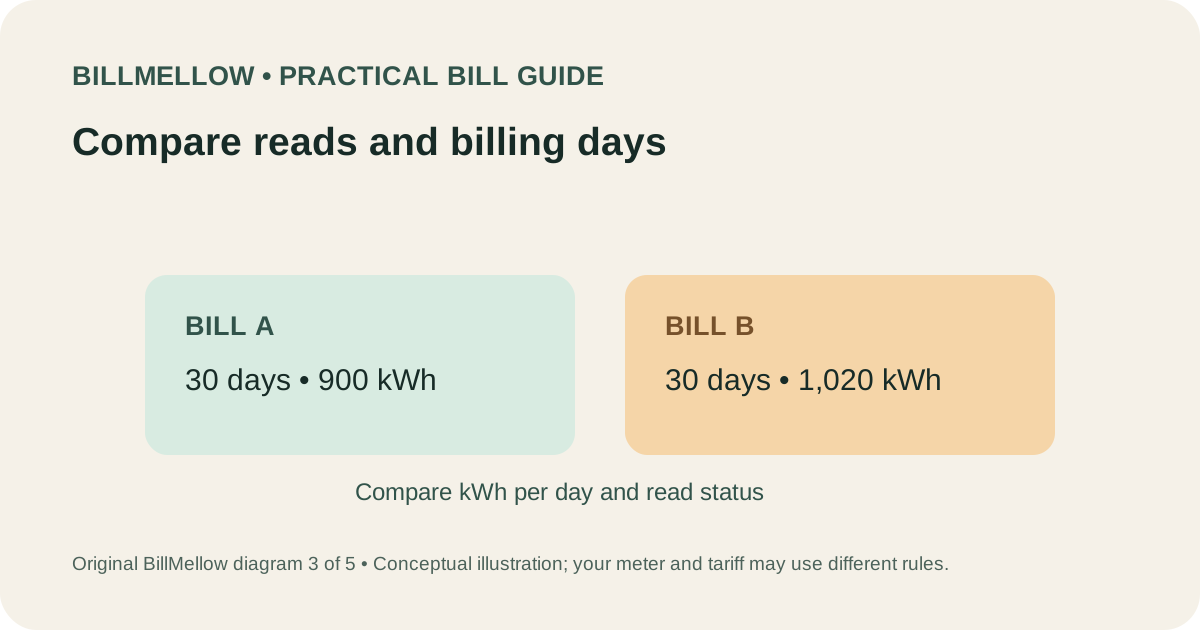
Check that the period length is comparable with the previous statement. A 34-day bill can have a larger total than a 28-day bill even when daily use is similar. Divide kWh by billing days to get a basic daily average, then compare periods with similar weather and household conditions. This helps describe the difference, but it does not recreate the utility's meter calculation.
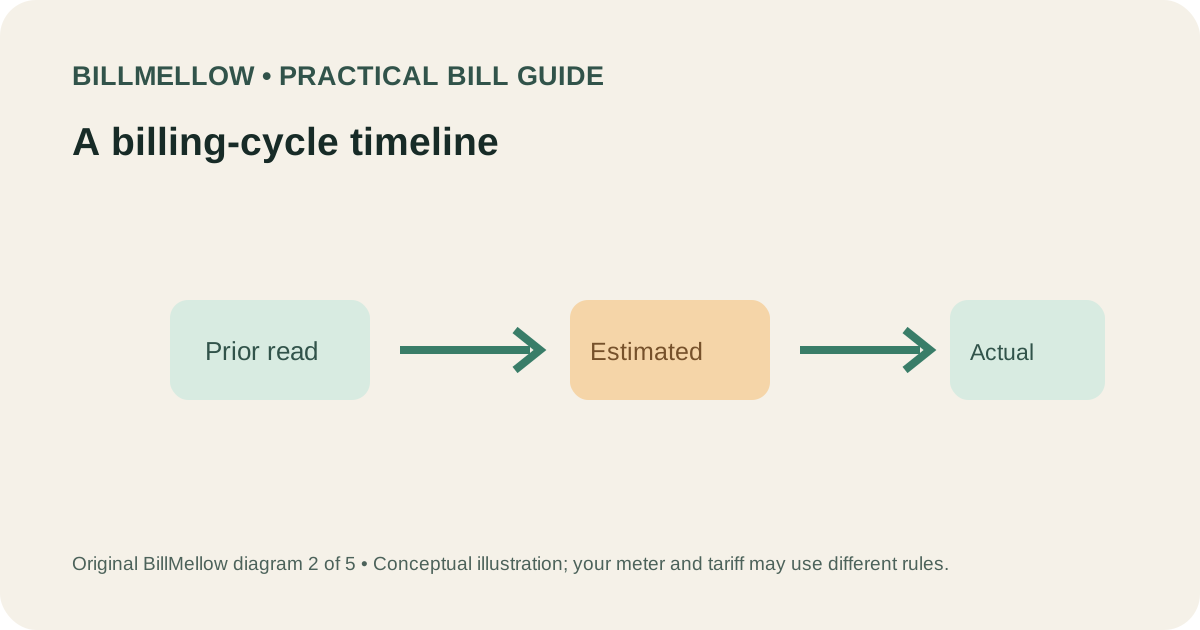
Why might a utility estimate a reading?
Common operational reasons can include an inaccessible meter, a missed route, a communications issue, a meter exchange, or a data problem. These are possibilities to ask about, not a claim about why a particular bill was estimated. Some meters report remotely, but remote-reading availability and customer-facing detail differ by service territory. A single estimated period does not show that a smart meter is defective or that the utility intentionally overcharged you.
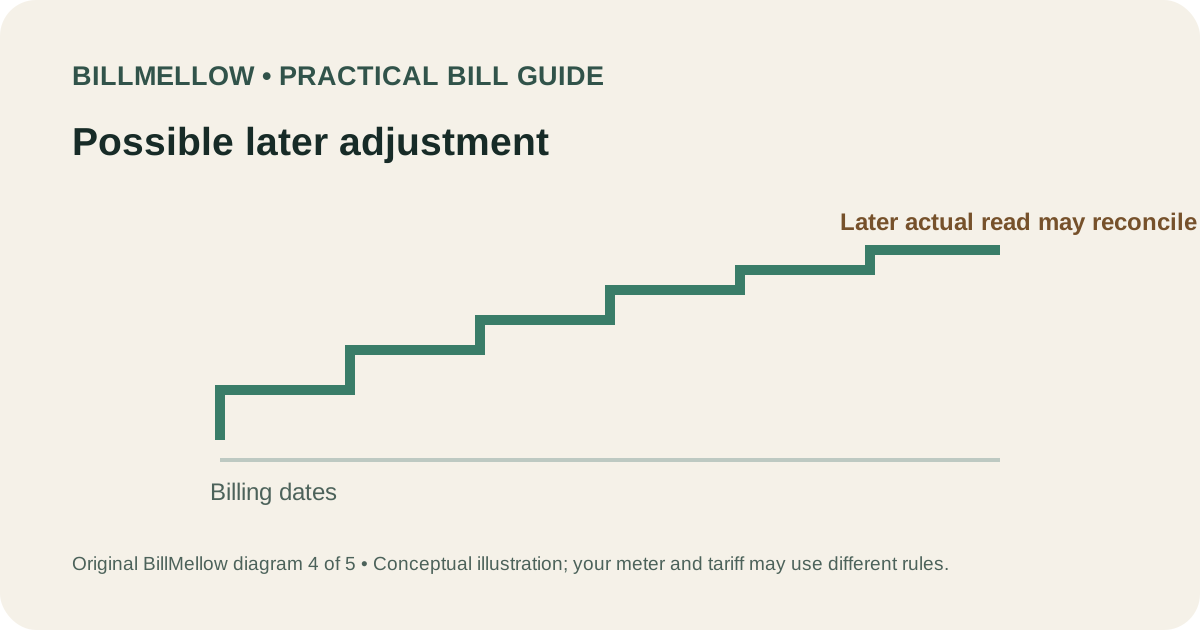
An estimate can be above or below the eventual actual consumption. If it is below actual use, a later bill can include a catch-up adjustment; if it is above actual use, the utility may credit or correct the account. Exactly how and when this is done depends on the provider's billing practices, rate schedule, and applicable rules. Do not assume that the next bill will always make a perfect one-month correction: billing periods and prices can also change.
Keep estimated usage distinct from an estimated dollar amount. A statement may use estimated kWh, a current rate, taxes, credits, and a balance from a prior month. The total due is therefore not a direct meter reading. For a broader review of statement components, see how to understand your energy bill and the electric bill review checklist.
Compare the next actual reading carefully
When an actual read appears, compare the reading dates and values rather than comparing only two bill totals. If the utility prints previous and current register values, the difference may be multiplied by a meter multiplier or adjusted under the billing rules. A meter register can also roll over, be exchanged, or have separate registers for time periods. Ask the provider how its bill’s “usage” was derived before subtracting values yourself.
Use a small tracking table with columns for service dates, read type, kWh, billed days, kWh per day, and adjustment credits or charges. This separates an extended period from a true rate change. Do not combine a prior estimated period with an actual period as though both were measured on the same dates. If there was a catch-up, ask which dates it covers and whether the provider has already billed those units.
If you can safely view a customer-facing display without opening equipment or touching wiring, note the date and visible reading and ask whether the utility accepts a customer-submitted read. Some providers offer an online form or app; others may not accept it for every meter. Follow only the instructions on the utility's official website. Do not remove a meter cover, enter a fenced electrical area, or handle a meter or service equipment.
A photograph of a display can be useful for your own records, but avoid posting it publicly. A meter number, address, barcode, or account record can identify a service location. If the provider requests a reading, use its secure channel and ask whether it needs a date-stamped photo or only the register value.
If the next bill is unexpectedly high
Start by identifying whether the next statement shows actual or estimated reads, how many days it covers, and whether it includes a prior-period correction. Then compare kWh per day and the rate on each bill. Weather, air-conditioning or heating use, occupancy, electric vehicle charging, and appliance schedules may affect consumption, but the bill alone does not isolate a cause. Avoid treating a catch-up bill as proof that current-month usage suddenly rose.
Check the math only after you understand the fields. Confirm the service address and meter identifier, read dates, meter register values, multiplier if shown, kWh billed, adjustment, and rate code. Taxes, fixed charges, fuel adjustments, and past-due balances can change the amount due without changing kWh. If you suspect duplicate consumption across periods, ask the utility to show the dates assigned to the adjustment and confirm that no billed interval was counted twice.
Do not delay payment based solely on an assumption that an estimate is wrong. Dispute and payment rules vary. Ask the utility about the due date, payment arrangements, review process, and whether a formal dispute affects collection or disconnection activity. Get any answer that changes an amount or deadline in writing when possible.
Questions to ask your utility
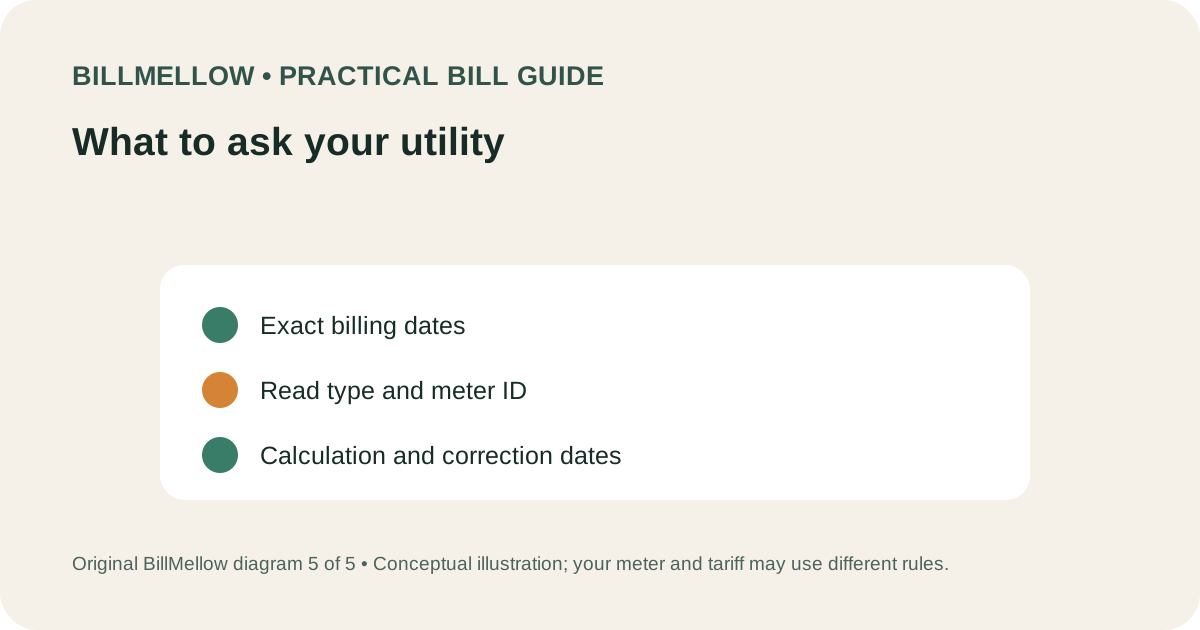
- Which reading on this bill is estimated, and what dates does it cover?
- What caused the estimate, and what method or history was used to calculate it?
- When was the last actual read, and when is the next one expected?
- Will a later actual read create an adjustment? Which dates and rate will it use?
- Does the usage include a meter multiplier, register rollover, or meter replacement?
- Can you provide the interval or register data used for the bill?
- What is the process and deadline to request a review of the read or calculation?
Frequently asked questions
Does an estimated electric bill mean I have a faulty meter?
No. It means the provider did not use an actual read for the relevant billing value, but it does not diagnose the meter. Ask why the estimate was used and when an actual read is planned. A meter test, if needed, follows the utility's process and local rules.
Can I read my own meter?
Some utilities accept customer-submitted reads for particular meters or situations; others rely on their own read data. Check the provider's official instructions first. Never open or interfere with metering equipment.
Will the next bill definitely be a credit?
Not necessarily. If the estimate was below actual use, the account may need a balance adjustment; if it was above actual use, a correction could reduce the amount. The result depends on actual usage, prices, credits, dates, and the utility's method.
Is an estimate always based on last month's usage?
Not always. Utilities may use different permitted methods, such as prior consumption, weather or seasonal patterns, or other account data. Ask what method was used for your specific statement.
Sources and limits
The U.S. EIA explains the ordinary reading-difference method and notes that billing-period use is sometimes estimated in its residential energy terminology. The details above are general education, not a finding about any particular utility or meter. Your provider's rate in effect, meter records, and applicable state rules determine account-specific handling.
BillMellow does not connect to utility meters or accounts. You can privately compare values from two statements using the bill comparison tool. For meter register multipliers, see how a meter multiplier affects billed kWh.