COOLING COSTS · BILLMELLOW GUIDE
How Much Does a Window AC Cost to Run?
BillMellow Editorial · Updated November 6, 2026
Estimate window air conditioner electricity cost from its wattage, runtime and your own utility rate. Learn what changes the result and how to lower cooling use.
The calculation
Watts ÷ 1,000 × operating hours × your variable electricity price per kWh = estimated energy cost. If the label gives amps and volts instead, watts are approximately volts × amps while the compressor runs; cycling and fan-only periods make actual use vary.
Illustration: a 900-watt unit running a total of 8 hours a day uses about 7.2 kWh/day at full rated input. At an assumed 18¢/kWh, that is about $1.30 per day or $39 over 30 days. This is a simple upper-style runtime estimate, not a measured bill: a thermostat cycles, the compressor draws differently, and delivery charges, taxes, fixed fees or peak pricing may change the result.
Find the AC power information that matters
Look for a manufacturer label or manual listing input watts, rated amps, voltage and cooling capacity. Do not calculate the bill from BTU alone: BTU describes cooling output, while watts describe electrical input. If only amps are shown, multiply by the equipment voltage for a rough running-power estimate; the nameplate maximum is not necessarily the average draw across a whole day.
A plug-in energy monitor rated for the unit’s voltage and current can measure actual kWh over several representative days. Use a safe, correctly rated device and never put a high-load appliance on an undersized monitor, adapter or extension cord. If you cannot measure it, label your estimate as an estimate and calculate a low and high runtime case rather than pretending one number is exact.
Estimate the cost from your own bill
Use the variable per-kWh portion of your electricity rate for an appliance estimate. Dividing your complete bill by kWh gives an all-in average that includes fixed charges and credits; applying that figure to an extra appliance can overstate its incremental cost. On a time-of-use plan, use the price for the hours when cooling actually runs.
For a tiered rate, estimate the marginal price in the tier your added use will enter. If your utility bill separates supply and delivery, include the applicable usage-based portions of both. Leave fixed customer charges, taxes and unusual one-time credits out of an energy-only calculation unless you are intentionally estimating the complete bill change.
Practical ways to lower the cooling load
Start with the room: close blinds before direct sun hits, seal obvious air leaks that are safe to address, and keep doors closed if you are cooling one room. A ceiling or portable fan can make a person feel cooler by moving air, but a fan does not lower room temperature; switch it off in an empty room.
Choose a thermostat setting that is comfortable and safe for household members. ENERGY STAR recommends choosing a comfortable setting and notes 78°F as a common starting point for room AC guidance; it is not right for every person, climate or health condition. If the room becomes too warm for an infant, older adult or person with a medical condition, comfort and safety take priority over a savings target.
A practical checklist
- Read watts or rated amps from the unit label; do not substitute cooling BTU for electric input.
- Estimate hours for a typical warm week, then repeat with a heat-wave scenario.
- Use the variable rate that applies during cooling hours; mark delivery and tax assumptions.
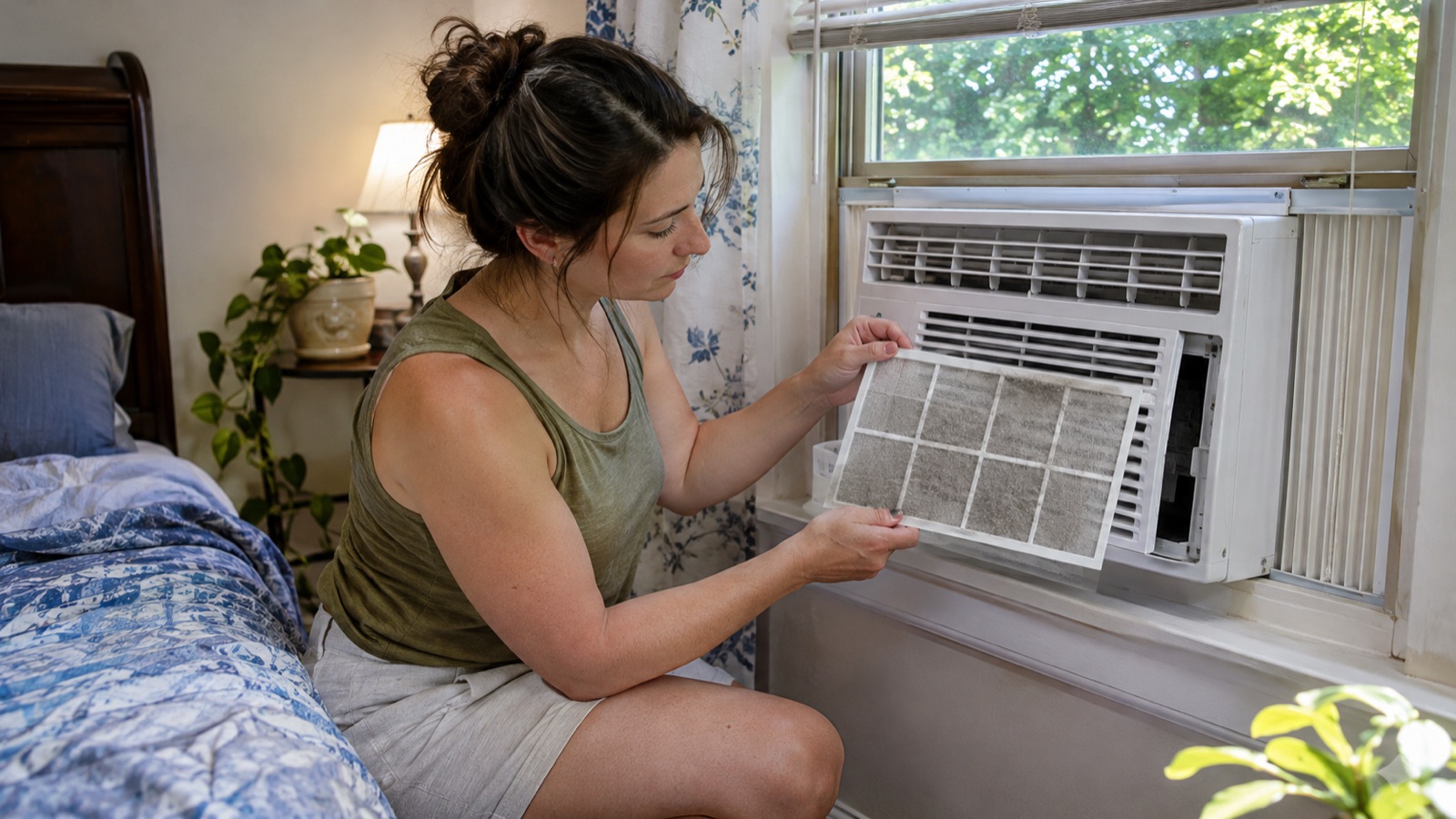
- Check the filter, window seal, sun exposure and airflow before replacing equipment.
- Compare kWh per day across similar-weather periods and note the thermostat schedule.
Frequently asked questions
Does a window AC use its full rated watts all day?
Usually the compressor cycles after the room approaches the set temperature, so rated input multiplied by all clock hours can overstate normal use. Very hot weather, leaks, a low setpoint or an undersized unit can keep it running longer. A correctly rated energy monitor or utility interval data is better evidence than a guess.
Is it cheaper to turn the unit off when I leave?
It depends on how long you are away, outdoor heat, humidity, the building and how much energy is needed to cool the room again. Avoid a universal rule: try a modest setback for a predictable absence and compare measured kWh on similar days. Do not let a home become unsafe for people, pets or sensitive equipment.
Can I compare two AC models by EnergyGuide cost?
Use the label as a standardized comparison between similar models, not as your personal bill forecast. The FTC says estimates use typical-use assumptions and national average energy prices. Your local electricity rate, climate, room, thermostat and runtime can produce a different cost.
Sources and limits
Linked sources provide the basis for this guide. Check them directly for current information, and contact the appropriate utility, agency, or manufacturer about your situation.
For more bill context, read how to read your electric bill or track monthly usage.