SOLAR BILL CHECK
Why Do I Still Have an Electric Bill After Solar?
BillMellow Editorial · Updated November 6, 2026
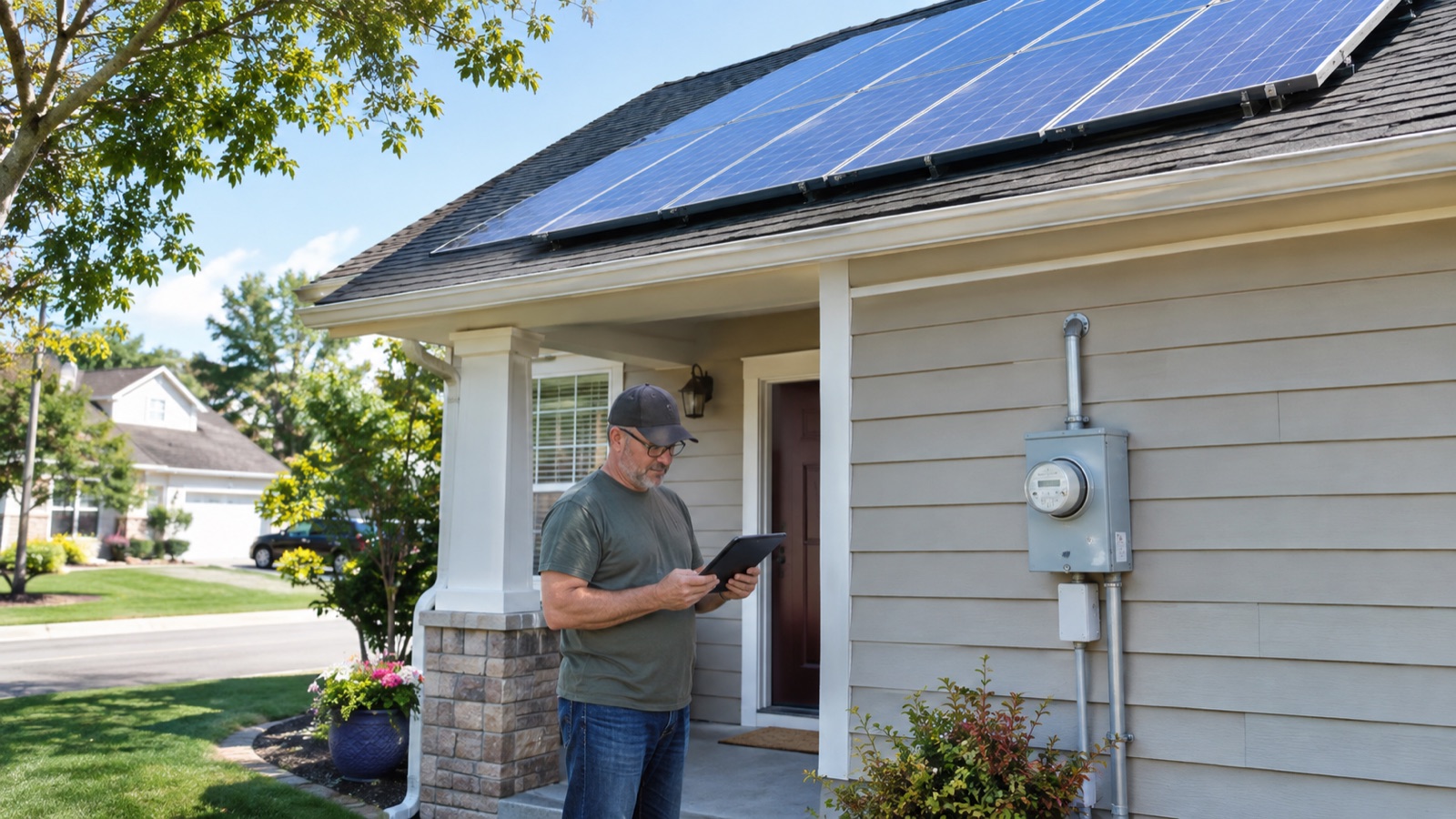
Installing solar panels does not automatically make an electric bill disappear. Panels may reduce electricity purchased from the grid, but the home can still import power at night, during cloudy periods, or when household demand exceeds solar production. A utility may also bill fixed charges or apply export credits under rules that do not offset every line item.
Solar generation is not the same as avoided grid use
A solar app usually reports how much the panels generated. The utility statement reports electricity imported from or exported to the grid according to the meter and billing system. If the home uses solar power at the same time it is generated, that electricity may be consumed onsite and never appear as an export. When the home later uses more electricity than the panels generate, it imports energy.
For example, a household may generate strongly in the afternoon but run the oven, HVAC, and EV charger after sunset. The panels can generate enough energy over a whole day while the home still buys electricity at night. Battery storage can shift some onsite energy to later hours, but its effect depends on system size, operating settings, weather, load, and rate schedule. It does not guarantee a zero bill.
Fixed and non-energy charges may remain
Many rate schedules include a fixed customer charge or minimum bill. Some programs exclude certain delivery, grid, public-purpose, or tax components from solar credits. Whether this applies to your account depends on its rate schedule and program. The monthly bill may show a net energy credit and still have a balance due because the credit only offsets eligible charges.
Read both the line-item section and the solar credit section. Identify imported kWh, exported kWh, credit applied, carryover balance, and any fixed charge. If the credit seems not to have reached an eligible line, ask the utility which charges it can offset and when credits are posted.
Billing period timing can change the result
Solar production is seasonal. A sunny summer month may create a credit while a shorter winter day and higher heating demand may create more imports. Some programs carry unused credits forward; others reconcile or settle on a schedule. A statement near a true-up date can include a balance or payment unlike an ordinary month.
Check the start and end dates on the solar monitoring app and the utility bill. They may not align. Also note whether the bill is estimated or actual. A delayed meter read or a utility processing adjustment can make the statement appear out of sync with the inverter app.
Compare system output with household use
Look at solar production, household consumption, imported grid energy, exported energy, and billing days as separate figures. Avoid comparing annual panel production with one month’s utility bill. Confirm the units and time intervals. If you have an energy monitor, review it as a diagnostic aid, not as the utility’s billing record.
Production can be lower than expected for reasons such as weather, shading, panel orientation, equipment outages, or soiling, but BillMellow cannot diagnose a solar system. If production differs materially from the installer’s forecast, contact the installer or system operator and compare the system monitoring data with the contract assumptions.
Read your program and agreement
Find the utility rate schedule, net-metering or net-billing terms, interconnection approval, and any solar financing contract. Confirm how exports are valued, whether credits roll over, when they expire or settle, and which charges cannot be offset. Rules can vary by state and utility and can depend on when the system was interconnected.
Also check whether your household has a separate payment to a solar lender, lease company, or power-purchase provider. That payment may not appear on the utility bill at all. A lower utility statement does not necessarily mean total energy-related costs fell if a separate monthly solar payment was added.
Questions to ask the utility
- How much electricity did the account import and export during this exact period?
- What rate or credit value was applied to exported energy?
- Which charges can the credit offset, and what fixed charges remain?
- When do unused credits roll forward or settle?
- Does the bill align with the system’s permission-to-operate and meter dates?
Ask the installer about production performance, and ask the utility about meter and rate schedule data. Those are separate questions for separate records.
For a clean before-and-after statement comparison, use BillMellow’s bill comparison tool. Enter comparable billing periods and keep fixed charges, credits, and separate solar payments visible. The result summarizes entered numbers; it does not verify the utility rate schedule or guarantee savings.
Sources and limits
The Department of Energy explains the basics of solar and net-metering credits, including why credit terms vary by utility and state. Your current rate schedule and agreement determine the treatment for your account.
This guide is for general education. Your utility’s rates, state rules, lease, or service agreement may differ. Verify account-specific details with the responsible provider.
Compare two electric bills · All electricity guides · Methods and limits · Privacy