ELECTRICITY GUIDE
Standby Power: How Much Electricity Do Idle Devices Use?
BillMellow Editorial · Published November 9, 2026
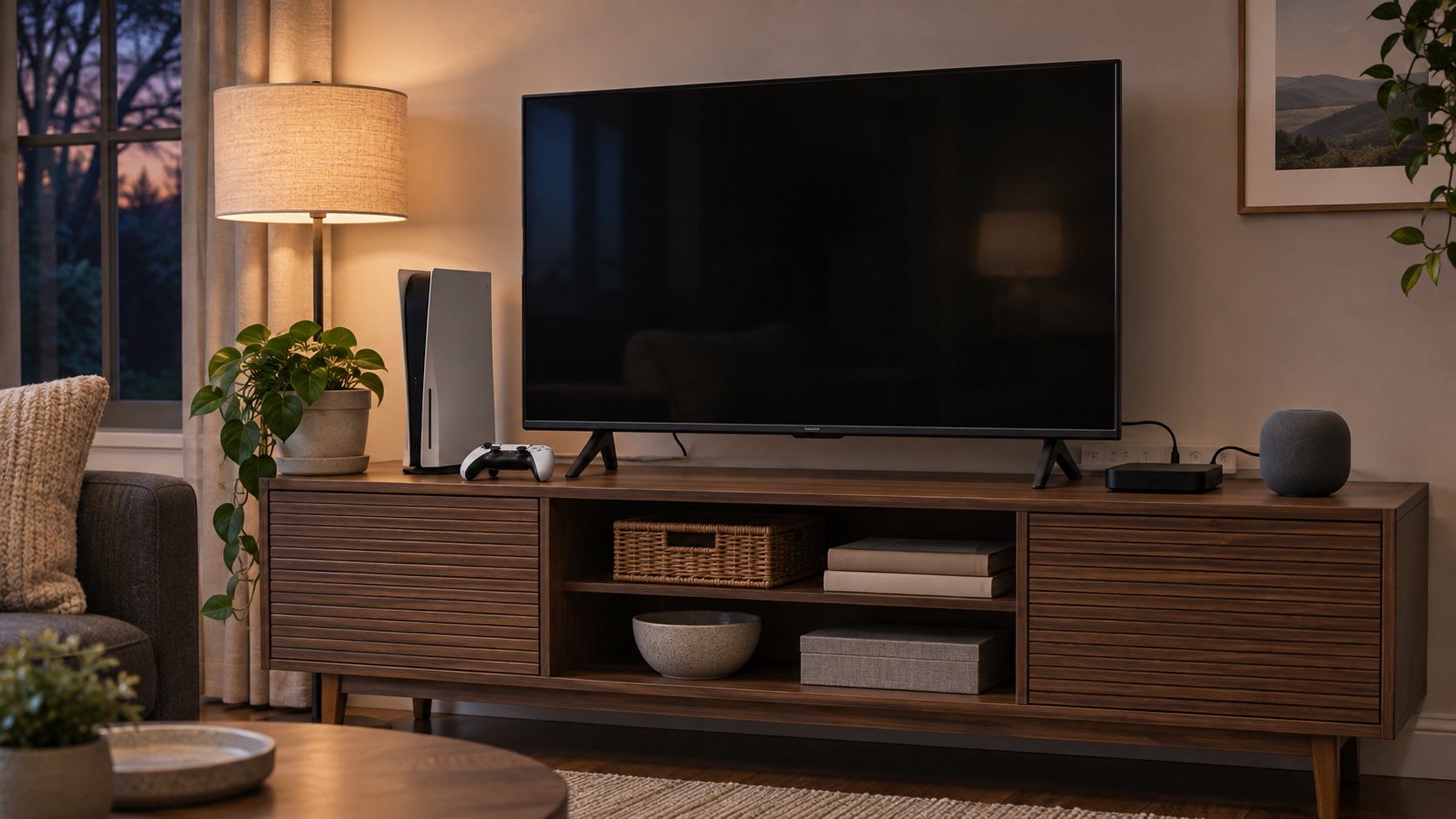
Learn how to estimate standby power cost from watts, idle hours, and your marginal electricity rate, with measurement tips and safe ways to reduce waste.
Estimate an appliance's electricity cost
A television that looks off, a printer waiting for a job, and a charger left at the wall may still draw a small amount of electricity. The U.S. Department of Energy calls this standby power: electricity a plugged-in product uses while it is in a low-power or standby mode. The cost of one device may be modest, but a good estimate helps you decide which loads are worth measuring.
Estimate standby energy from watts
If a device draws a steady number of watts all year, calculate:
- Annual kWh = standby watts × 8,760 hours ÷ 1,000
- Annual cost = annual kWh × your applicable electricity price per kWh
There are 8,760 hours in a 365-day year. The formula assumes the device stays at the stated wattage continuously. Many products switch between standby levels, wake for updates, or draw different power depending on their network connection, so a single watt reading is only a snapshot.
A simple example
Suppose a plug-in meter shows a device averaging 4 watts in standby for the whole year. At an illustrative $0.18/kWh:
- 4 × 8,760 ÷ 1,000 = 35.04 kWh per year
- 35.04 × $0.18 = $6.31 per year
For five identical devices, the same assumptions produce 175.2 kWh and $31.54 per year. This is an estimate, not a claim that every home has five such devices or that every device draws 4 watts. A 0.5-watt load would cost one-eighth as much; a 10-watt load would cost 2.5 times as much.
Measure before making a change
The Department of Energy's Federal Energy Management Program describes standby power measurement and points to IEC 62301 test procedures. For a household estimate, a plug-in energy monitor that reports watts and cumulative kWh can help with compatible cord-connected equipment. Read its rating and instructions, and never exceed its current or power limits.
Some low-power readings move around or fall below a meter's resolution. Observe the device long enough to include its normal standby behavior; for a networked television or printer, several hours or a full day may reveal patterns a short reading misses. A meter also adds its own uncertainty. If your utility provides interval data, a single small appliance may be too subtle to distinguish from the rest of the home.
Use a measured average where possible. Otherwise, treat a label, online estimate, or one instant reading as a rough assumption and show it as such. Do not multiply a rated maximum wattage by all 8,760 hours unless the device really operates at that maximum continuously.
Which devices deserve a closer look?
Prioritize products that combine noticeable standby draw with long idle hours: older audio systems, always-ready printers, game consoles, set-top boxes, desktop computers, and network equipment may be worth checking. The actual draw differs substantially by model and settings. A smart speaker or router also performs an active function while you are not interacting with it, so its electricity is not necessarily wasted standby energy.
Look for these clues:
- A display, clock, indicator light, or warm power adapter remains on.
- The device can start quickly by remote, receive network commands, or record scheduled content.
- Several devices stay powered through a shared entertainment or office area.
- The device is old or has settings such as instant-on that you do not use.
These clues identify candidates to measure, not proof of a costly load. A small indicator light alone does not tell you the watts.
Reduce waste without interrupting useful functions
Check the product settings first. Sleep timers, automatic power-down, and an energy-saving mode may lower use while preserving features you need. The Department of Energy notes that enabling power-saving mode on computers can reduce computer energy use; the amount depends on equipment and use. See its computer purchasing and efficiency guidance.
A switched power strip can disconnect a group of peripherals when they are genuinely idle. Before switching anything off, check whether it must remain available for safety, alarms, security, remote access, scheduled recording, software updates, or network service. Do not unplug medical equipment or a device whose manual says it must remain powered. Avoid placing a strip where it can be overloaded or covered.
Put the estimate in bill context
Standby calculations estimate energy, not the full electric bill. Multiply kWh by the marginal energy price for the relevant usage range. A fixed monthly customer charge generally does not disappear when you unplug a device, and taxes or delivery charges may be calculated differently under your utility's rate plan. See BillMellow's supply and delivery charge guide before treating an all-in bill average as the savings rate.
A useful sequence is to measure a candidate, estimate its annual kWh, multiply by your usage-based price, then decide if the change is worth the convenience tradeoff. For example, cutting 35 kWh/year at $0.18/kWh saves about $6.30 before any rate complications. That may be worthwhile if it is easy and safe, but it is not a promise of a large bill reduction.
Frequently asked questions
Does a charger use power when nothing is connected?
Some chargers consume power while plugged in, but the amount depends on the model and operating state. Measure it with suitable equipment rather than assuming every charger draws the same amount.
Is turning a device off the same as unplugging it?
Not always. A powered-off device can still have a standby circuit. A true mechanical switch or disconnected plug stops that device's draw, but may also remove features or interrupt updates.
Can I add all standby watts from the labels?
Only as a rough upper bound if the ratings describe the mode you care about. Rated input can be a maximum rather than the actual idle draw. Measured kWh over a representative period is more useful.
For the basic watts-to-kWh conversion, visit BillMellow's appliance electricity guide and transparent calculation methods.
All electricity guides · Compare plan costs · Methods and limits · Editorial standards