ELECTRICITY GUIDE
Portable Generator Safety: Placement, Connections, and Refueling
BillMellow Editorial · Published November 12, 2026
Learn how to reduce carbon monoxide, fire, and shock risks when using a portable generator at home, including safe placement, transfer equipment, and refueling steps.
A portable generator can run selected equipment during an outage, but it also introduces serious carbon monoxide, fire, and electric-shock hazards. The safest plan begins before the storm: read the manual, identify a location outdoors, decide how loads will connect, and make sure the household knows when to shut the unit down. A generator’s fuel type or “inverter” label does not make indoor operation safe. Never run one in a home, garage, basement, crawlspace, shed, or other enclosed area—even with doors or windows open.
Place the generator outdoors and away from openings
CPSC guidance says to operate portable generators outdoors at least 20 feet from the home and other buildings, with exhaust directed away from windows, doors, and vents. Follow the generator’s current manual and any stricter local direction. Do not put a generator on a porch, beneath an open window, in a breezeway, or in an attached garage. Wind can carry exhaust toward openings, so check the setup as conditions change. Keep the exhaust path clear and do not assume that a carbon-monoxide shutoff feature makes a poor location acceptable.
Use working carbon monoxide alarms
Carbon monoxide is colorless and odorless. A person cannot reliably detect it by smell, appearance, or a phone sensor. Install and maintain carbon monoxide alarms according to their manufacturer’s instructions and local requirements; check batteries and expiration dates before storm season. If an alarm sounds or anyone develops symptoms that could be consistent with CO exposure, move everyone outside to fresh air and contact emergency services. Do not re-enter until responders say it is safe. A generator alarm feature is an additional safeguard, not a substitute for household alarms or safe placement.
Connect loads without backfeeding
Never power a home by plugging a generator into a wall outlet. CPSC warns that this practice, called backfeeding, can energize utility lines and expose utility workers or neighbors to electrocution; it can also bypass protective devices. If you want to power selected household circuits, ask a licensed electrician about an approved transfer switch or other locally permitted equipment. Ask how the arrangement isolates the home from utility service, which loads are supported, what inspection is required, and how the equipment is operated. Use only cords and connections rated for the intended outdoor use and electrical load.
Select loads from the nameplate, not guesses
Make a list of the devices you hope to run and record their input watts or amps from the manufacturer label. Some motors need more power to start than they use while running. Add the starting and running demands the way the generator manual specifies; do not assume the rated output supports every appliance at once. Prioritize essential equipment, then operate additional loads only if capacity remains. A refrigerator, sump pump, well pump, or medical device may have distinct startup or continuity needs. Confirm those requirements with the manufacturer or a qualified electrician before relying on a portable unit.
Handle fuel and refueling cautiously
Follow the manufacturer’s directions for fuel type, storage, cooling, and maintenance. Turn the generator off and allow it to cool before refueling; spilled fuel can ignite on hot parts. Store fuel only in approved, properly labeled containers and outside living areas, away from ignition sources and appliances, while following fire-code and local requirements. Never refuel a running generator. Do not use a generator in wet conditions unless the manual describes a safe setup; keep electrical connections dry and use listed outdoor-rated equipment. If the manual’s instructions are unclear, contact the manufacturer before operating.
Keep children, pets, and neighbors in mind
A generator produces hot surfaces, moving parts, exhaust, noise, and electrical hazards. Set a clear boundary around it and keep children and pets away. Tell household members where it will be located and which connections are in use. Consider neighboring windows and shared walls when choosing an outdoor position, while maintaining the required distance and ventilation. Do not route exhaust toward another building or a place where people gather. Check local noise restrictions if the unit may run overnight, but never move it closer to the house to reduce noise.
Before the next outage
Practice the safe setup in daylight without starting the equipment if local conditions or the manual make operation inappropriate. Confirm the extension cords or transfer equipment are the right type and in good condition. Check oil and other maintenance items on the schedule in the manual. Make sure everyone knows how to shut the generator down and what to do if a CO alarm sounds. Keep emergency contacts handy. A licensed electrician should review permanent connections or a proposed transfer arrangement; BillMellow cannot inspect wiring or approve a generator installation.
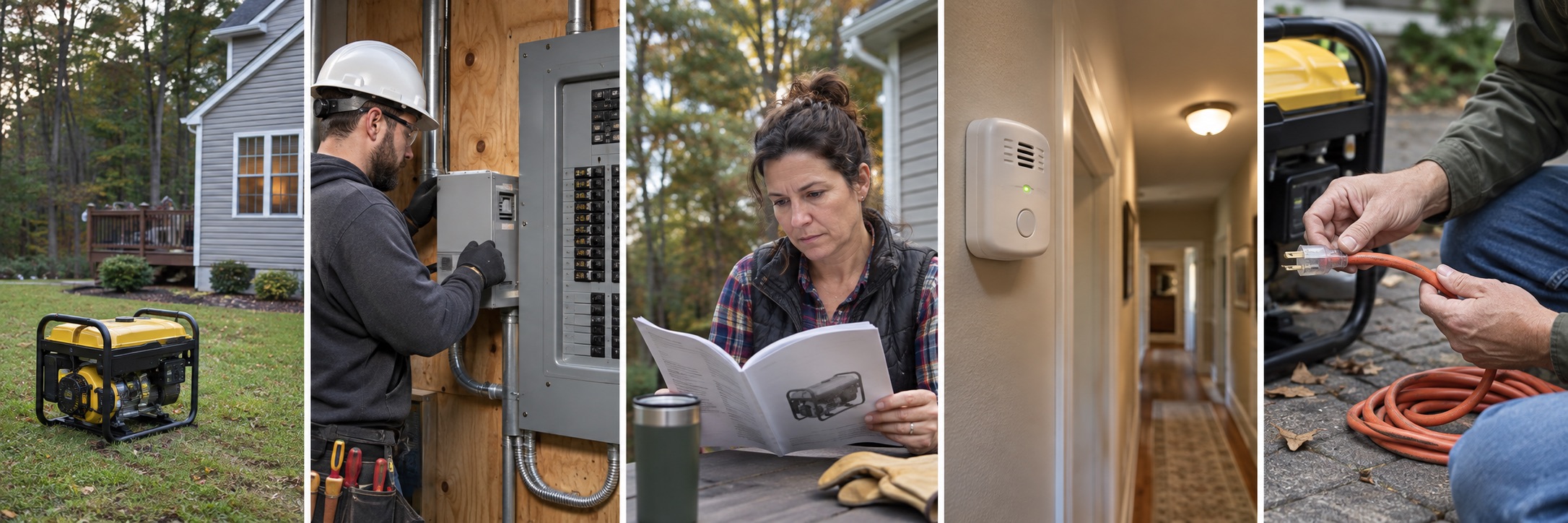
Keep the decision grounded in your own home
Choose a generator setup only after identifying the loads, the location that can meet outdoor clearance requirements, and the connection method approved for your home. A portable unit is not a substitute for a properly installed transfer arrangement. Check the exact model manual and local fire and electrical rules before purchase or use.
Separate facts from assumptions
Verify the generator’s running and starting ratings, fuel type, manual clearances, and the input requirements of each intended appliance. Do not treat a wattage label as proof that multiple motor loads can start together. Confirm any transfer switch or inlet with the electrician responsible for the installation.
A practical record to keep
Save the model and serial number, manual, maintenance log, approved fuel-storage instructions, carbon-monoxide alarm dates, and the electrician’s transfer-equipment documentation. Keep emergency contacts and a reminder to refuel only after shutdown and cooling. Store fuel only as the manufacturer and local rules allow.
Common mistakes to avoid
Never operate a portable generator indoors, in an attached garage, or close to doors, windows, or vents. Never connect it through a wall outlet or improvise a connection that can backfeed utility lines. Do not refuel a hot or running unit, and do not rely on smell to detect carbon monoxide.
A short next-step checklist
- Read the current manual and verify the 20-foot outdoor placement guidance.
- Choose an exhaust direction away from openings and occupied spaces.
- Test and maintain carbon-monoxide alarms as directed.
- Have a licensed electrician install and explain transfer equipment.
- Calculate essential loads and practice shutdown steps before an outage.
Frequently asked questions
How far should a portable generator be from a house?
CPSC guidance says at least 20 feet from the home and other buildings, with exhaust directed away from openings. Follow the current manual and stricter local requirements.
Can I plug a generator into a wall outlet?
No. That can backfeed utility lines and create electrocution and fire hazards. Ask a licensed electrician about an approved transfer switch or connection.
Can I refuel while the generator is running?
No. Shut it down and let it cool as the manual directs before refueling; spilled fuel can ignite on hot components.
Sources and scope
This article is general U.S. consumer education, not an electrical design, legal opinion, emergency dispatch service, or utility quote. Read the primary-source material linked in the relevant section and confirm local requirements before acting. Official guidance can change; check the publication and revision dates on the source page.
Primary source: U.S. Consumer Product Safety Commission generator safety and CPSC portable generator safety alert.
All electricity guides · Compare plan costs · Methods and limits · Editorial standards