ELECTRICITY GUIDE
How Much Electricity Does a Pool Pump Use?
BillMellow Editorial · Published November 7, 2026 · Updated November 10, 2026

Estimate a pool pump’s monthly electricity cost from its measured input power, speed schedule, run time, and your electricity rate—not horsepower alone.
Estimate an appliance's electricity cost
A pool pump’s cost depends on its electrical input, operating speed, and schedule. The pump may run differently for filtration, a cleaner, a water feature, heating, or other pool equipment. A horsepower label alone does not provide the household’s kWh, and a fixed “hours per day” rule may not suit a particular pool. Start with a real meter reading or reliable input-power value, then follow the pool manufacturer’s and service professional’s guidance for circulation and water quality.
Estimate the energy and cost
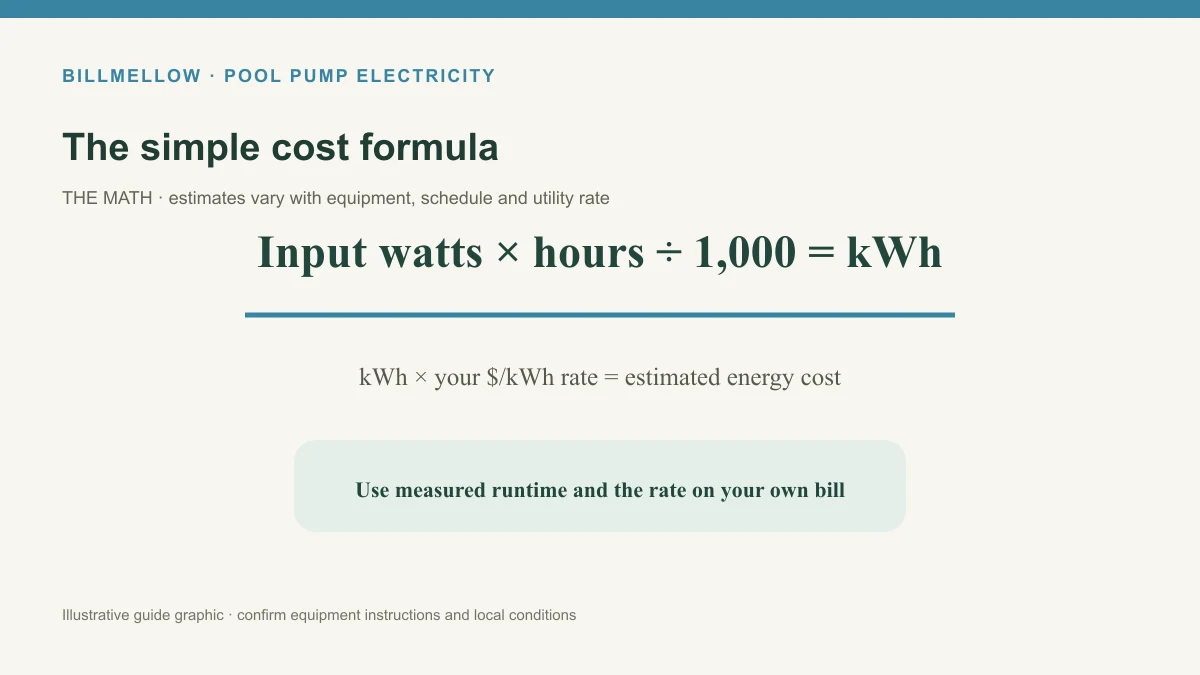
For a steady input, watts × hours ÷ 1,000 gives kWh. If a pump draws 900 watts while running for eight hours, that scenario uses 7.2 kWh per day. Over 30 days that is 216 kWh. At an illustrative marginal rate of $0.18 per kWh, the variable energy estimate is $38.88. These are example inputs, not a typical pool-pump rating or recommended schedule. Replace them with the actual electrical input, operating speed, hours, and applicable rate for your system.
Read the pump and system together
Check the pump manual and nameplate for model, voltage, current, speed settings, and electrical input. Horsepower is a mechanical rating and can differ from the power drawn by the motor. The plumbing layout, filter, valves, heater, cleaner, and water features affect how the pump operates. A meter that reports kWh over time captures input energy more directly than an estimate based on horsepower alone.
A single-speed pump operates at one speed, while a variable-speed model can be programmed for different tasks. Lower speed may use less power, but it also moves water more slowly. The correct schedule must meet the pool’s circulation, filtration, sanitation, and equipment needs. Do not copy a schedule from another pool or reduce circulation without checking water clarity, chemical treatment, local conditions, and the equipment instructions. A clean filter and suitable plumbing setup can affect how the system performs, but service work should be done by someone qualified for the equipment.
Measure by speed and task
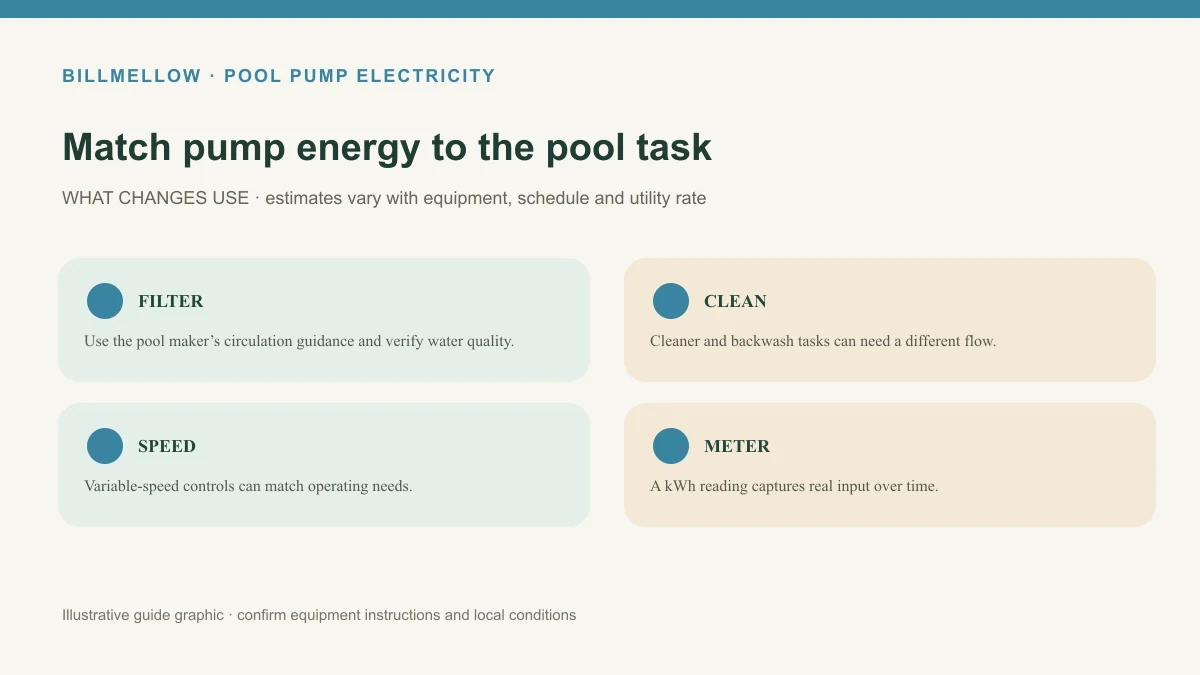
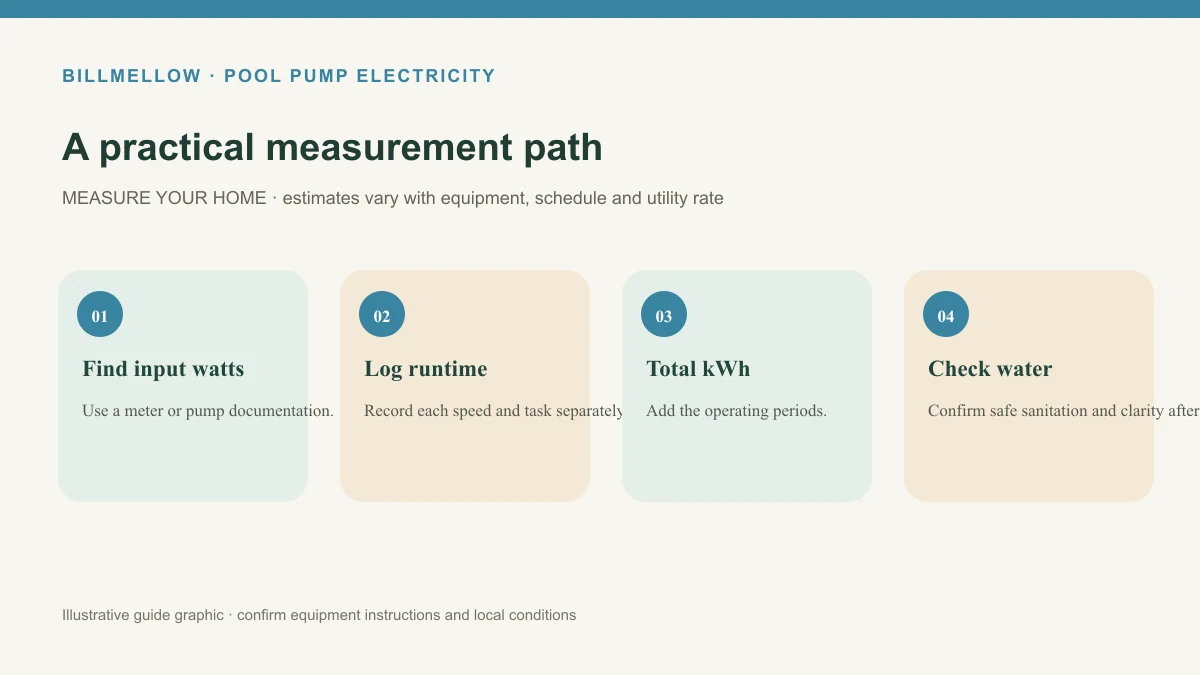
If your system has a built-in energy display, record daily kWh along with the speed program and runtime. Otherwise, use a properly installed circuit monitor or ask an electrician or pool professional to measure the pump circuit. Many pool pumps use dedicated electrical equipment. Do not open the panel, remove the pump housing, or handle wiring near water to install a monitor yourself. Make sure the measurement tool is rated for the circuit and installation.
Record at least a week that represents normal operation. Note filtration hours, cleaner use, backwashing or filter cleaning, water features, and any change in pool use. If the pump runs at more than one speed, track each program separately. A brief reading during a quiet week may not represent a period with more cleaning or hotter weather. If you change a timer or speed, record the before and after readings and monitor water clarity and sanitation throughout the comparison.
Compare variable-speed operation without assuming a fixed saving
ENERGY STAR describes certified pool pumps as products that can vary speed to match pool functions, such as filtration and cleaning. Its pool pump guidance explains that the required flow differs between tasks. The amount saved in one installation depends on the pump, hydraulic system, operating speed, schedule, and pool needs. A general product-page savings figure should not be presented as a guaranteed result for your home.
Before changing a program, ask the installer or pool service professional which flow is required for the filter, cleaner, heater, salt system, or other connected equipment. If the pump has a low-speed mode, confirm that it still supports the intended task and that water quality remains acceptable. If the system loses prime, leaks, makes unusual noise, or fails to keep water clear, investigate the cause rather than extending runtime or lowering speed by guesswork.
Estimate a monthly bill portion
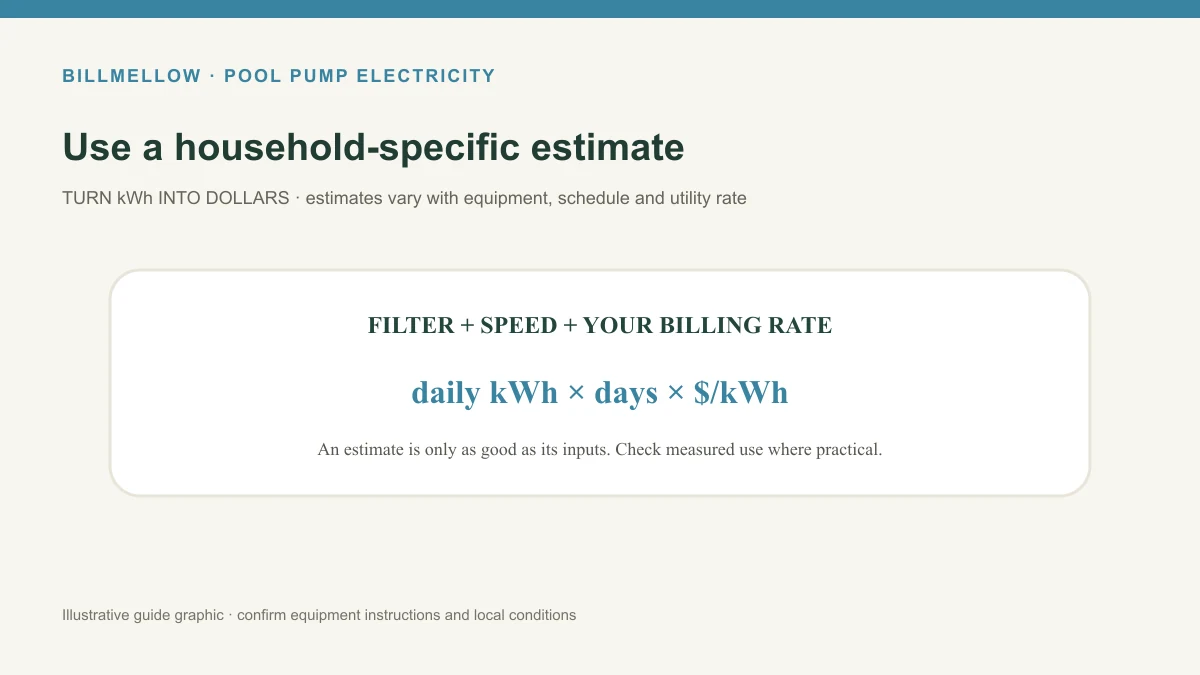
If your meter shows 6.8 kWh per day for 30 days, the monthly energy would be about 204 kWh. At an illustrative $0.18 per kWh, that is $36.72 in variable energy charges. Add separate pumps or pool equipment only if your measurement does not already include them. A whole-pool circuit monitor may capture a heater or booster pump as well, so identify what the meter covers before attributing the total to the main circulation pump.
Use your bill’s variable supply and delivery rates. Fixed customer charges generally do not rise with one additional kWh, while time-of-use pricing or tiered rates may make the cost depend on when or how much the pump runs. Compare kWh per day across similar billing periods, and check whether the bill covered the same number of days. BillMellow’s electricity supply and delivery guide explains the rate components.
Use a cautious before-and-after check
For an operating change, record at least several ordinary days before and after, keep other pool tasks similar, and note weather and water conditions. Compare measured kWh rather than assuming the controller’s displayed percentage equals the same percentage change in electricity. If the result looks different from the estimate, verify that the monitor covers the same equipment, the speed program saved correctly, and the sample periods are comparable.
The U.S. Environmental Protection Agency’s ENERGY STAR pool pump page offers current buying guidance, and its product criteria describes certification requirements. Use those for product comparisons, not as a substitute for sizing and programming advice for your exact pool. This page estimates energy cost and does not replace pool maintenance, water-treatment instructions, electrical code, or advice from a qualified professional.
All electricity guides · Compare plan costs · Methods and limits · Editorial standards