ELECTRICITY GUIDE
Power Outage Preparation: A Practical Home Checklist
BillMellow Editorial · Published November 12, 2026
Prepare for a home power outage with a practical checklist for communication, food, medications, heat, cooling, and safe backup power—without assuming when service will return.
A power outage can last minutes or longer than expected. The useful question is not only “What should I buy?” but “Which needs become urgent first, and what can I safely do without electricity?” A household plan should account for communication, refrigerated medicine, food, drinking water, heating or cooling, mobility, and the limits of any backup equipment. The plan below is designed to be completed before severe weather, then adjusted for the people and equipment in your home. It does not predict restoration time; only your electric utility or local emergency agency can provide current outage information.
Start with people and essential needs
List everyone who depends on powered medical equipment, refrigerated medicine, elevators, powered mobility devices, or temperature control. Ask the clinician or equipment supplier how long each item can operate without normal power and what the approved backup plan is. Do not wait for a forecast to make this call. If an outage could become a medical emergency, identify the local emergency number, the nearest appropriate care location, and a safe way to get there. Share the plan with a trusted neighbor or family member, while limiting access to private health details.
Plan communication before cell service is stressed
Write important phone numbers on paper, including the electric utility outage line, local emergency management, a family contact outside the area, and the clinician or pharmacy that supports essential medicine. Keep phones charged and identify a power bank that is itself charged and compatible with the devices you rely on. A battery radio may be useful if internet or mobile service is disrupted. Save the official utility outage page in advance; social posts can be delayed, incomplete, or about a different service area. Never use an unverified link in a message to enter a utility password or payment information.
Protect food and medicine with a plan
Know which refrigerator or freezer contains food that needs temperature control, and keep the doors closed during an outage. A refrigerator thermometer helps you make a decision based on temperature rather than guesswork. CDC guidance explains safe handling and which foods to discard after an extended loss of power. Ask a pharmacist or clinician for medicine-specific storage advice; do not assume the food rule applies to medication. If you need a cooler, ice, or another temporary arrangement, plan how to keep medicines separate and monitor their required temperature.
Prepare for indoor temperature changes
Consider how quickly your home becomes too hot or too cold without heating, air conditioning, fans, or ventilation. Identify a safe room, clothing and bedding options, and a place you could go if the indoor temperature becomes unsafe. Do not heat a home with a gas range, charcoal grill, camp stove, or generator. Fuel-burning devices can produce carbon monoxide and may create fire hazards. Keep carbon monoxide alarms operational where applicable and follow the device manufacturer’s directions. If anyone shows concerning symptoms after suspected carbon monoxide exposure, leave the building and contact emergency services.
Choose backup power by the need it serves
A flashlight, charged phone, battery radio, and power bank cover different needs from a generator or stationary battery. Decide what must remain available, for how long, and who will operate the equipment. Read manuals before buying or using backup power. A generator can produce lethal carbon monoxide; a battery system has its own installation, capacity, and operating limits. Do not connect a generator to household wiring by plugging it into a wall outlet. Home wiring connections and transfer equipment require an approved setup installed and inspected under local rules by a qualified professional.
Make an outage-day routine
When service fails, check that the outage is reported through your utility’s official channel and look for updates from local emergency management. Keep refrigerator and freezer doors shut. Use flashlights instead of candles when possible. Unplug sensitive electronics if the utility or equipment manufacturer advises it, and avoid repeatedly switching large loads on as power returns. If you see a downed wire, stay well away and report it to the utility or emergency services. Treat every fallen wire as energized; do not try to move it or drive over it.
Review after service returns
Check that clocks, medical devices, refrigeration, internet equipment, and any backup system have returned to normal operation. Follow official food-safety guidance before keeping refrigerated or frozen items. Record the outage start and end time, any utility notices, and essential expenses if you may need to ask about a specific assistance program or claim. Do not assume that an outage automatically creates a bill credit; eligibility and claims depend on the utility and jurisdiction. Recharge supplies and replace anything used so the plan is ready for the next event.
Keep the decision grounded in your own home
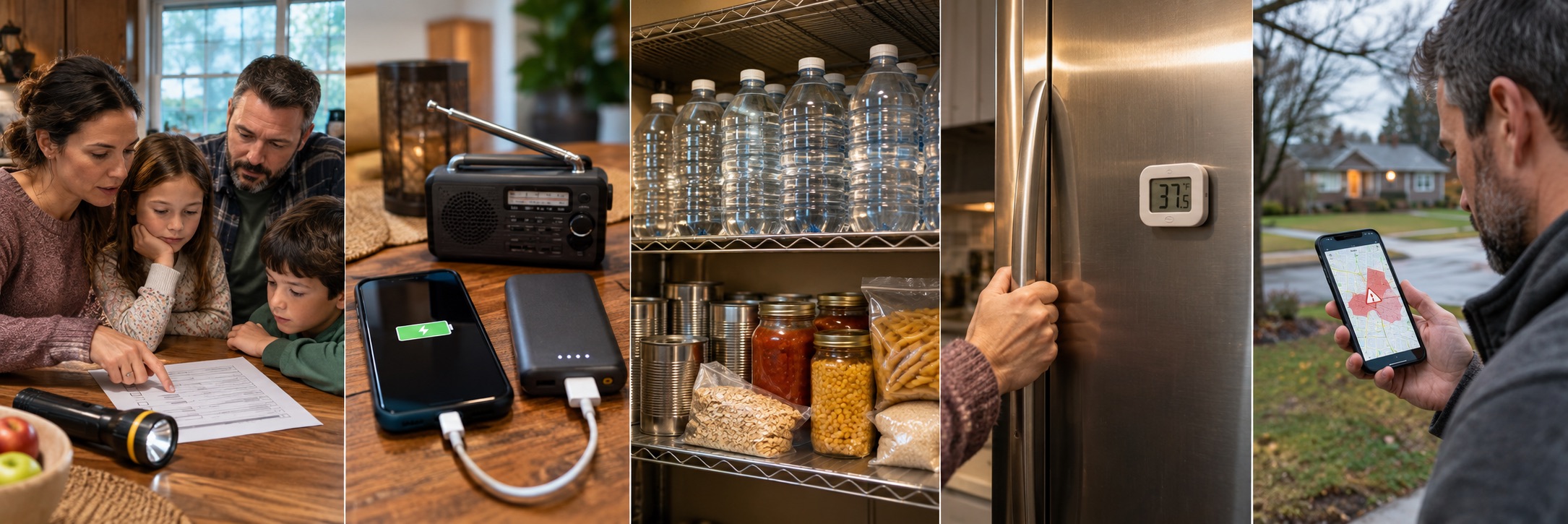
Build the plan around the people, medical equipment, indoor temperature limits, and communication needs in your household. A plan for a short neighborhood outage differs from one involving a medically necessary device or prolonged extreme weather. Confirm any clinical backup requirement with the care team before an outage.
Separate facts from assumptions
Record confirmed facts such as the utility outage number, the equipment manual, battery capacity, and the household meeting location. Mark estimated restoration times, expected device runtime, and possible shelter availability as estimates. Utility restoration estimates can change as crews assess damage.
A practical record to keep
Keep a printed contact sheet, medical-device power instructions, flashlight and radio locations, charged power-bank details, and the latest utility account outage instructions. Store the plan where household members can find it without internet access. Avoid putting account numbers or medical details in public posts.
Common mistakes to avoid
Do not use a stove, grill, or portable generator to heat an indoor space. Do not assume a phone will remain charged or that an outage alert provides a guaranteed restoration time. Avoid opening refrigerator doors repeatedly, and follow current food-safety guidance before keeping temperature-sensitive items.
A short next-step checklist
- List household members and powered medical or mobility needs.
- Ask the care team about an approved backup plan where needed.
- Save the utility outage line and local emergency information on paper.
- Prepare safe lighting, charged power banks, and a temperature plan.
- Review the plan before storm season and after each outage.
Frequently asked questions
How long will a refrigerator stay cold during an outage?
Keep the doors closed and follow current CDC food-safety guidance; safe storage time depends on the appliance, temperature, and outage duration.
Should I use a generator to run medical equipment?
Ask the equipment supplier or clinician about an approved backup plan, and follow generator placement and connection safety rules. Do not run a generator indoors or near openings.
Where can I get local outage updates?
Use the electric utility’s verified outage channel and local emergency-management alerts. Restoration estimates can change and do not replace an emergency plan.
Sources and scope
This article is general U.S. consumer education, not an electrical design, legal opinion, emergency dispatch service, or utility quote. Read the primary-source material linked in the relevant section and confirm local requirements before acting. Official guidance can change; check the publication and revision dates on the source page.
Primary source: Ready.gov power outage guidance and CDC food safety during a power outage.
All electricity guides · Compare plan costs · Methods and limits · Editorial standards