ELECTRICITY GUIDE
How Much Electricity Does a Hot Tub Use?
BillMellow Editorial · Published November 7, 2026 · Updated November 10, 2026
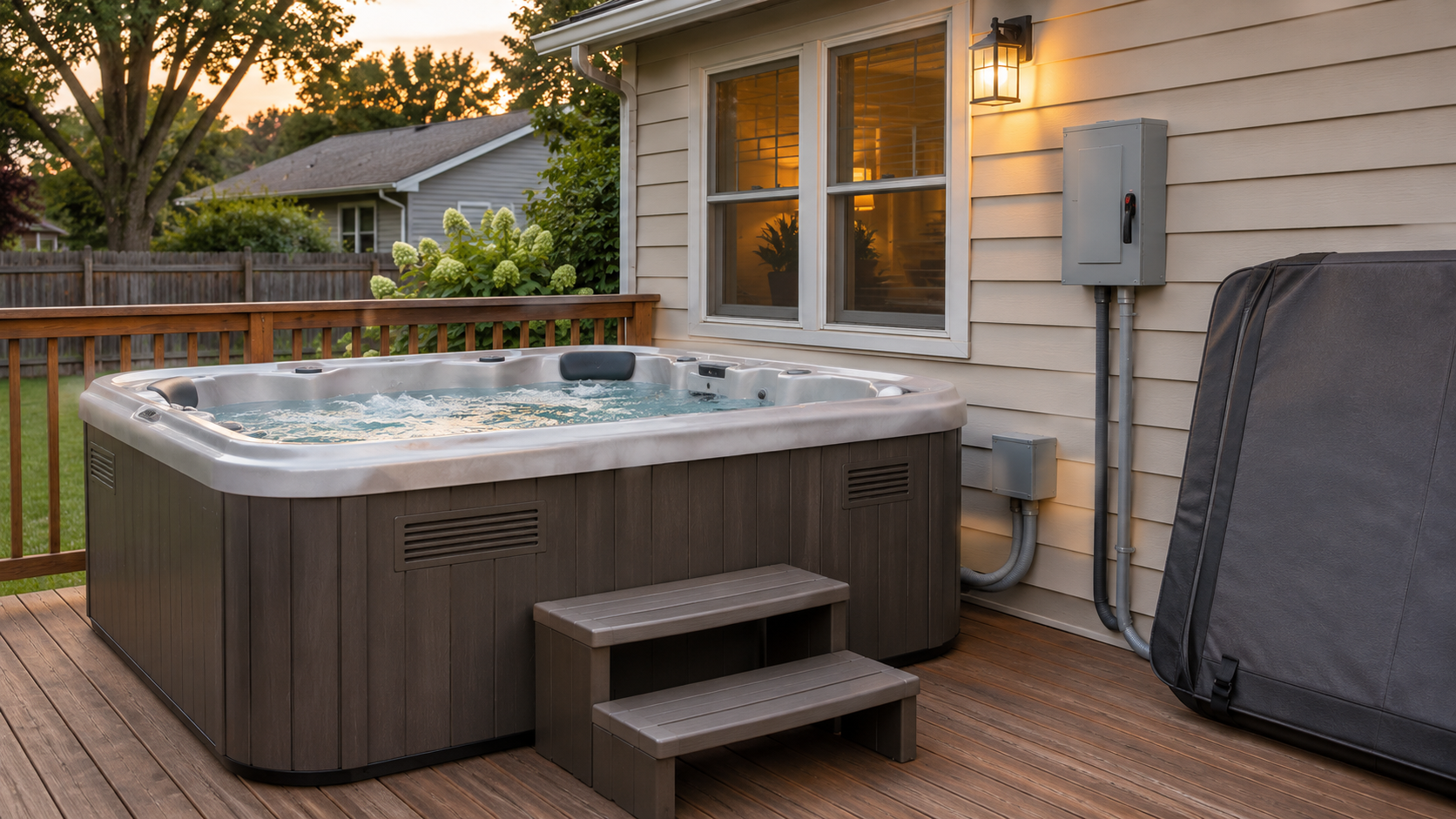
Estimate hot-tub electricity costs using heater and pump input, equivalent operating hours, water temperature, cover condition, and your own utility rate.
Estimate an appliance's electricity cost
A hot tub can use electricity while nobody is in it. The heater replaces heat lost from the water, while the circulation and filtration system may run on a schedule. Jets, pumps, controls, and freeze-protection settings add other loads. Because those parts operate differently, the most useful estimate measures the entire tub over ordinary days and compares the result with water temperature, weather, use, and the utility rate.
Start with a measured kWh change
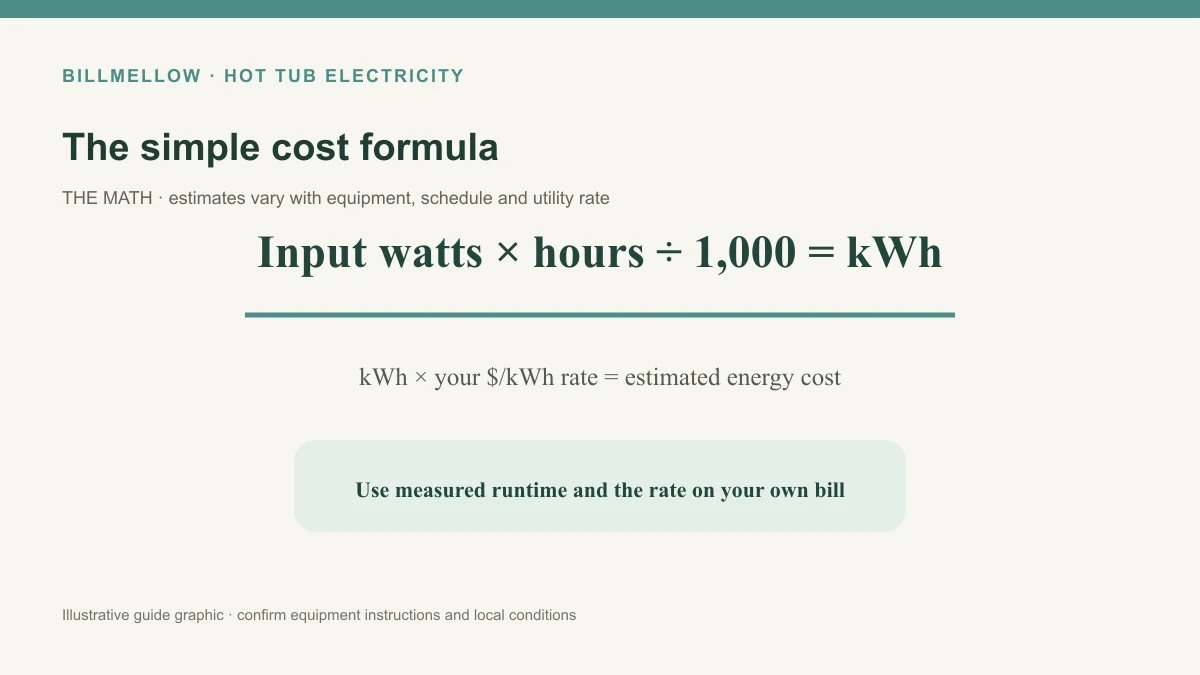
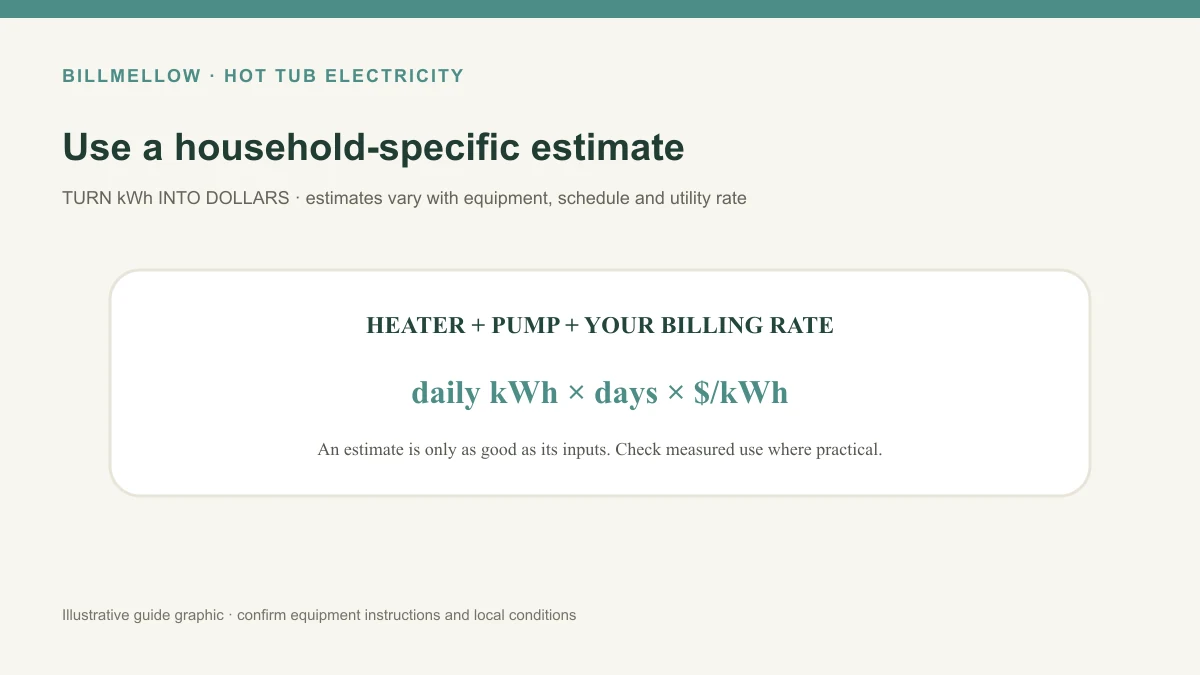
The general cost calculation is energy in kWh × the marginal price per kWh on your bill. If a suitable whole-appliance meter shows 9 kWh in a day, multiplying by 30 gives 270 kWh in a 30-day month. At an illustrative rate of $0.18 per kWh, that would be $48.60 in variable energy charges. The 9 kWh figure is only a scenario; it is not a typical hot-tub use claim. Actual use varies with spa design, temperature, cover, location, weather, pump schedule, and how the household operates it.
Separate the heater from circulation and jets
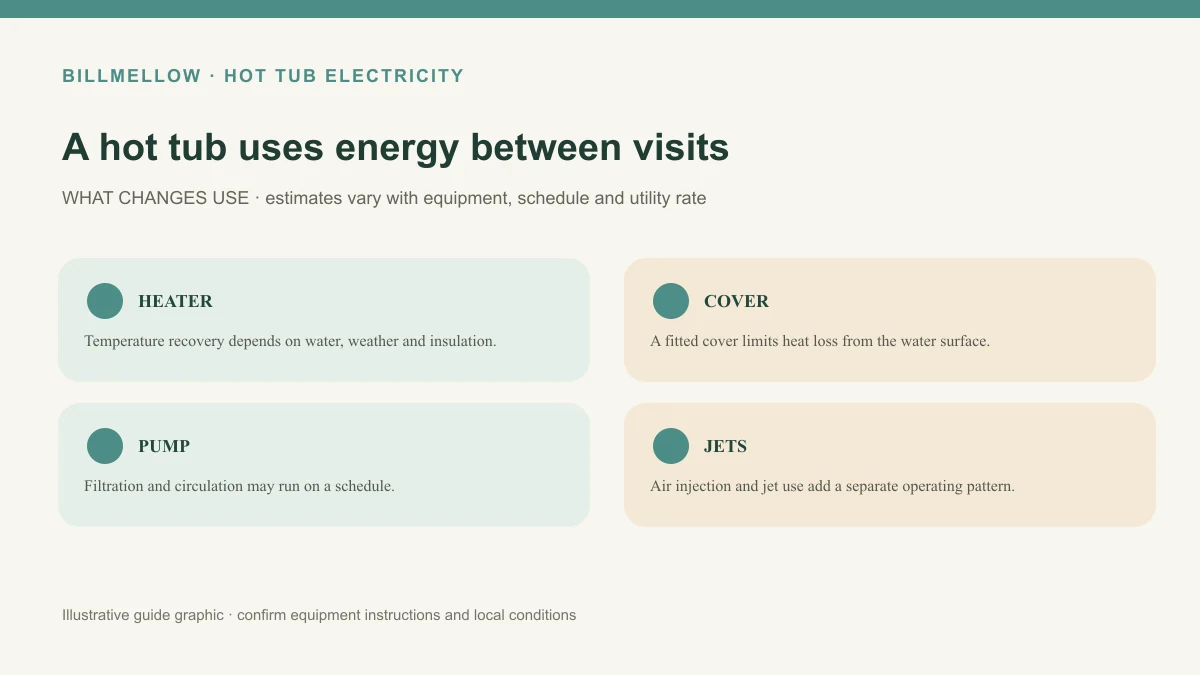
A spa’s electrical label may list circuit requirements or maximum input, not a normal day’s consumption. The heater cycles as needed, while the filter pump and control system may run on a timer or operate in short periods. Jets can create a separate pattern during use. A heater’s rated kW multiplied by 24 hours would usually be a poor estimate because the element does not necessarily draw continuously. Conversely, looking only at the hours a person uses the tub misses the energy used to maintain temperature between visits.
Portable spa energy depends on heat transfer through the water surface, cabinet, floor, and plumbing. A well-fitting cover can reduce heat loss from the top when the spa is not in use. Keep the cover clean and fitted according to the owner’s manual, and check for waterlogging, damage, or a seal that no longer meets the edge. Do not put objects on it or modify its safety locks. Insulation, wind exposure, ambient temperature, tub setpoint, and filter schedule can all change the measured result.
Measure safely over more than one day
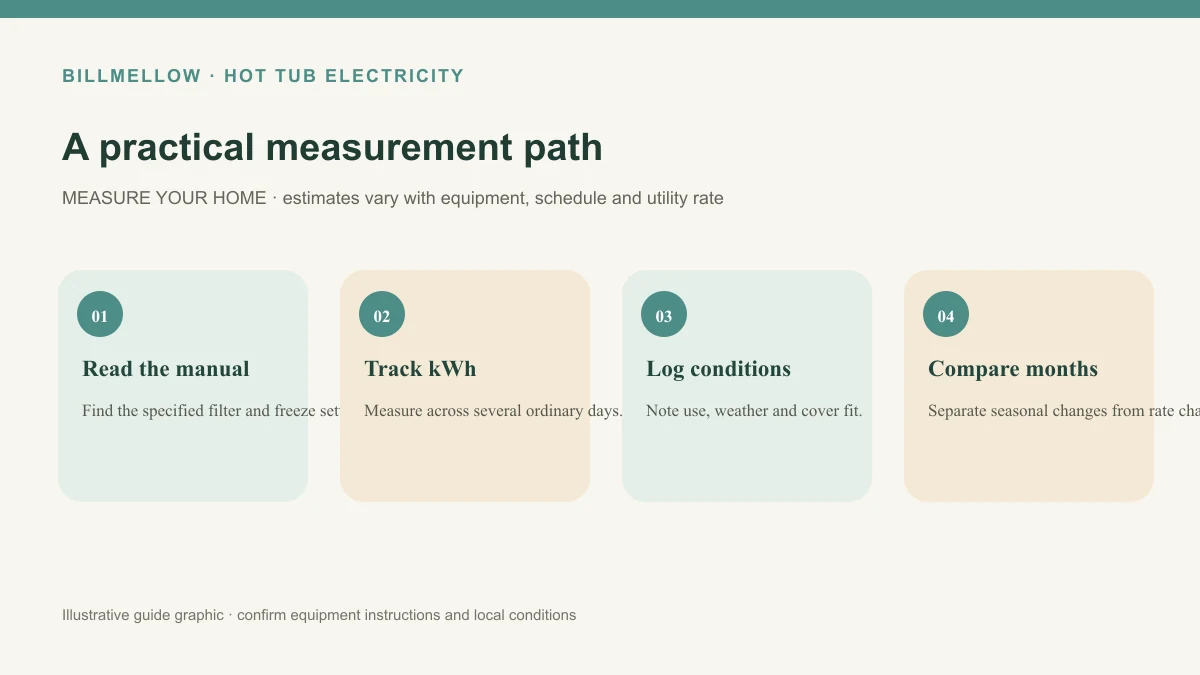
The best measurement is a meter or energy-management feature appropriate for the spa’s voltage, amperage, and wiring. Many tubs are hardwired or require a dedicated circuit; a regular plug-in monitor is not appropriate. Do not remove covers, open electrical compartments, or install a meter yourself. Ask a licensed electrician or spa technician for a safe measurement method. Some utility meters or home energy systems can show a dedicated circuit if it was installed for monitoring.
Measure several ordinary days and record the cover status, target temperature, filter cycle, air temperature, wind exposure, and whether the tub was used. For a seasonal estimate, repeat the measurement in a different part of the year. Comparing a cold week with a mild week without noting weather can make an equipment change look larger or smaller than it is. If the tub has a vacation, economy, sleep, or freeze setting, check the manufacturer’s explanation before changing it.
Think carefully before changing the temperature schedule
Lowering a setpoint or changing a filtration cycle may affect recovery time, water treatment, freeze protection, and the time needed to make the tub ready. The energy effect depends on the spa’s insulation, ambient temperature, control logic, and how long it stays at each setting. Shutting the tub off may reduce standby use in some circumstances, but it can require a long reheating period and may not be suitable in freezing weather or for the water-care schedule. Check the manual and local conditions rather than applying a universal rule.
DOE’s materials on portable electric spas discuss heat loss from the cover, walls, and floor and note that normal use includes periods when a covered spa maintains temperature and filters water. The Department also currently describes the scope and rulemaking status on its portable electric spas page. Proposed or historical test documents are not a guarantee of a particular household bill, so this guide relies on your measured use.
Estimate the variable cost and compare months
Suppose a safe monitor records 210 kWh over 30 days. At an illustrative 18 cents per kWh, the variable energy estimate is 210 × $0.18 = $37.80. Your actual bill can include supply and delivery rates, time-of-use pricing, taxes, and fixed charges. Use the rate that applies to the measured hours if your plan has peak and off-peak periods. If the spa is used more on weekends, a short weekday measurement may not represent a month.
Compare the hot-tub meter with a similar prior period and account for billing days and weather. If you only have the whole-house bill, also record other large loads such as air conditioning, electric heat, and water heating. A household total cannot isolate the spa by itself. BillMellow’s time-of-use guide explains why the rate can vary by time, and the bill comparison tool can separate a usage change from a price or billing-period change.
When to call a professional
A sudden kWh jump, repeated breaker trips, damaged cord or wiring, unusual overheating, leaking near electrical parts, or a pump that no longer follows its schedule deserves a qualified service call. Keep people away from damaged electrical equipment and follow the spa maker’s safety instructions. Do not bypass GFCI protection, interlocks, temperature limits, or required water-treatment cycles to lower a bill. The estimate on this page is an energy calculation, not an electrical safety or water-quality diagnosis.
All electricity guides · Compare plan costs · Methods and limits · Editorial standards