ELECTRICITY GUIDE
How Much Electricity Do Holiday Lights Use?
BillMellow Editorial · Published November 15, 2026
Estimate holiday light electricity cost from the watt rating, number of strings, daily hours, and your own electric rate. Compare LED and incandescent lights without guessing.
Estimate an appliance's electricity cost
Start with the watt rating, not the number of bulbs
The fastest reliable estimate begins with the input wattage printed on the string, adapter, or product label. “A hundred lights” does not tell you how much electricity the set uses: bulb size, LED versus incandescent technology, color effects, and the design of the string all matter. If the label gives amps and volts rather than watts, multiply volts by amps for a rough maximum wattage estimate. A dimming controller or animated display may change actual demand, so a plug-in energy meter can be more informative when used according to its instructions.
Add the wattage of every set that will run at the same time. Do not confuse the maximum number of connectable sets with their actual power use. Follow the manufacturer’s connection limit and electrical instructions; the circuit’s capacity and the string’s ratings still matter. A label is a useful starting point, not permission to chain unlimited decorations.
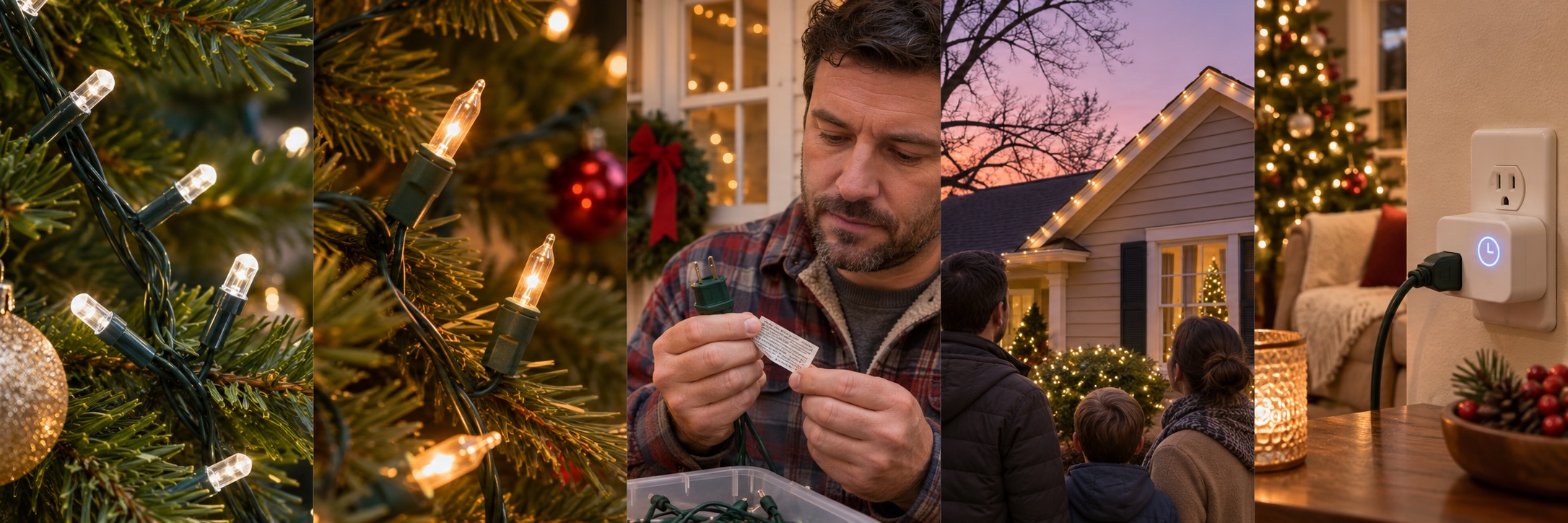
Use one formula for a fair estimate
Convert watts to kilowatts by dividing by 1,000. Multiply kilowatts by the hours the lights run and by the number of days. That gives estimated kilowatt-hours (kWh). Multiply the kWh by the variable price you actually pay per kWh to estimate the energy portion of the cost.
For example, suppose five LED strings are each labeled 6 watts and run six hours a day for 35 days. The connected load is 30 watts, or 0.03 kW. The seasonal use is 0.03 × 6 × 35 = 6.3 kWh. At an example energy rate of 18 cents per kWh, that is about $1.13. This is a worked example, not a claim that every set uses 6 watts or that 18 cents is your full bill rate. Replace both assumptions with the label and your bill.
If a string lists only a range, use the higher value for a conservative estimate. If a display includes a transformer or control box, use the product’s total input rating rather than adding a guessed figure for the lights alone.
LED versus incandescent: compare actual sets
LED strings usually use less electricity than comparable incandescent strings, but the exact difference depends on the products being compared. ENERGY STAR says certified decorative light strings use about 92% less energy than conventional incandescent strings; that is a comparison for certified products, not a guarantee for every LED product or display. Check the packaging and the watt rating before calculating.
For a simple comparison, use the same number of operating hours and days for both options. Multiply the incandescent string’s listed watts and the LED string’s listed watts by those shared hours. The difference in kWh multiplied by your variable rate is the modeled energy-cost difference. Purchase price, replacement frequency, color quality, brightness and use conditions are separate decisions. A lower wattage reading by itself does not settle which product is a better value.
Put timers and schedules into the calculation
A timer changes the number of operating hours; it does not change the watt rating of the lights. If you currently run decorations from dusk until bedtime, estimate the actual average hours over the whole season instead of assuming the longest night. For a timer, count the programmed hours. For a smart plug, check whether the product is rated for the location and the total load, and follow its electrical instructions.
Create a small list of indoor and outdoor sets with each watt rating, daily schedule and planned season length. Add simultaneous loads for the electrical connection, but calculate cost by actual operating schedule. If some strings run only on weekends, model those separately rather than multiplying all sets by the same daily hours. A calendar reminder to turn decorations off is not a substitute for a listed timer or for following the manufacturer’s instructions.
Check the rest of the bill separately
The calculation estimates the energy use of the lights, not the whole utility bill. A monthly customer charge, delivery fees, taxes, fuel adjustments, minimum bills, or a time-of-use schedule can make your billed cost differ from a simple energy-rate multiplication. On a flat-rate plan, using the variable energy charge is a convenient estimate. On a time-of-use plan, the price at the hours the lights run can matter. If your tariff has multiple price periods, calculate each period separately using the schedule from the provider.
A short seasonal decoration run may add little compared with space heating, cooling, water heating, or other larger loads, but the answer depends on your house and tariff. Avoid attributing a bill change to the decorations without comparing kWh per day, billing days and line items across bills.
Holiday-light safety is part of the plan
Use lights marked for the location where they will be installed. Inspect cords, plugs and connections before hanging; retire strings with damaged insulation, loose connections, missing parts or other defects. Use clips instead of nails or staples that could damage a cord. Read the product instructions for connections and installation. Turn off light strings and decorations before leaving home or going to bed, as the National Fire Protection Association advises.
ENERGY STAR recommends certified decorative strings and notes that outdoor products are tested for weather exposure. Keep electrical connections out of water unless the product instructions specifically allow the setup. Use outdoor-rated cords only when appropriate, protect connections as the manufacturer directs, and avoid running cords where they can be pinched, tripped over or damaged. Never use a watt estimate to override a product’s ratings or a circuit’s limits. For damaged outlets, frequent breaker trips or warm plugs, stop using the setup and contact a qualified electrician or the landlord.
A worksheet you can reuse next year
Save a note with the string name, labeled watts, location, hours per day, first and last operating dates, and the price per kWh used. A photo of the label can help identify the same product later. If you replace a set with a lower-wattage option, repeat the estimate using the new label rather than carrying forward last year’s assumptions.
The result is most useful as a planning estimate: it tells you the scale of the lighting load under stated assumptions. It does not measure the meter, predict the exact amount on the next statement, include every utility charge, or determine whether a decoration is electrically safe. Check the final bill against the actual dates and compare like periods.
Do holiday lights use a lot of electricity?
The answer depends on the labeled watts and how long the strings run. A few low-wattage LED strings used for a limited schedule may contribute only a small energy charge, while a large display, high-wattage incandescent strings, or long daily hours can use more. Calculate the connected wattage and schedule instead of relying on bulb count or a blanket average.
Are all LED holiday lights 92% cheaper to run?
No. ENERGY STAR reports about 92% lower energy use for certified decorative light strings compared with conventional incandescent strings. That is not a promise for every product pair or an exact bill saving. Compare the watt labels of the specific products and use the same schedule and electric rate for both estimates.
Should I use the average residential price?
Your own bill or tariff is usually a better starting point. A national average includes customers in many places and may combine several bill components. If you only have a broad estimate, label the rate as an assumption and keep the result separate from a live quote or exact bill forecast.
What if the lights have a controller?
Use the product’s input rating when available. A controller may change brightness or effects, so actual use can vary. A properly rated energy meter can measure a device over a representative period; follow the meter and light manufacturer’s instructions.
Can a timer make outdoor lights safe?
A timer can help control operating hours, but it cannot correct damaged cords, unsuitable indoor-only lights, overloaded connections, or improper installation. Inspect the equipment, follow its outdoor-use and connection ratings, and turn the system off before service.
Sources and limits
The cost estimate uses the watt rating and hours you enter; it is not a utility quote. Check the exact set's label, indoor or outdoor rating, and instructions. The U.S. Consumer Product Safety Commission explains its criteria for seasonal and decorative lighting products. Check current CPSC recalls and product safety warnings for the specific product. These general references do not replace the manufacturer's instructions or local electrical code.
Continue with your own numbers
For a repeatable watts-to-kWh method, see the appliance electricity use guide. To compare actual household statements, use the two-bill comparison tool.
All electricity guides · Compare plan costs · Methods and limits · Editorial standards