WATER HEATING · BILLMELLOW GUIDE
Heat-Pump Water Heater Savings: Costs, Payback & Fit
BillMellow Editorial · Updated November 6, 2026
Compare heat-pump and standard electric water heaters with household-specific energy, installation and utility-rate assumptions. Review space and operating tradeoffs.
The calculation
Annual operating-cost difference = baseline heater kWh × your rate − replacement annual kWh × your rate. Simple payback = net installed cost ÷ annual operating-cost difference; include only confirmed rebates.
ENERGY STAR estimates an average household of four can save about $550 per year compared with a standard electric water heater under its assumptions. That is not a guarantee. If a household’s verified annual savings were $250 and net installed cost $2,500, simple payback would be 10 years. At $500 annual savings it would be 5 years, before financing, maintenance or future rate changes.
How a heat-pump water heater works
A heat-pump water heater moves heat from surrounding air into the water tank instead of converting all incoming electricity directly to heat at a resistance element. Many models include a resistance backup mode. Efficiency and operating cost therefore depend on both the unit’s performance and the temperature, volume and airflow of its installation space.
ENERGY STAR lists household savings estimates for certified equipment, including an approximate $550 annual comparison for a household of four versus a standard electric water heater under specified assumptions. Treat that number as a starting point, not your expected cash savings. A smaller household, different hot-water use, different local rate or frequent backup operation can change the result.
Include the installed project, not just the product price
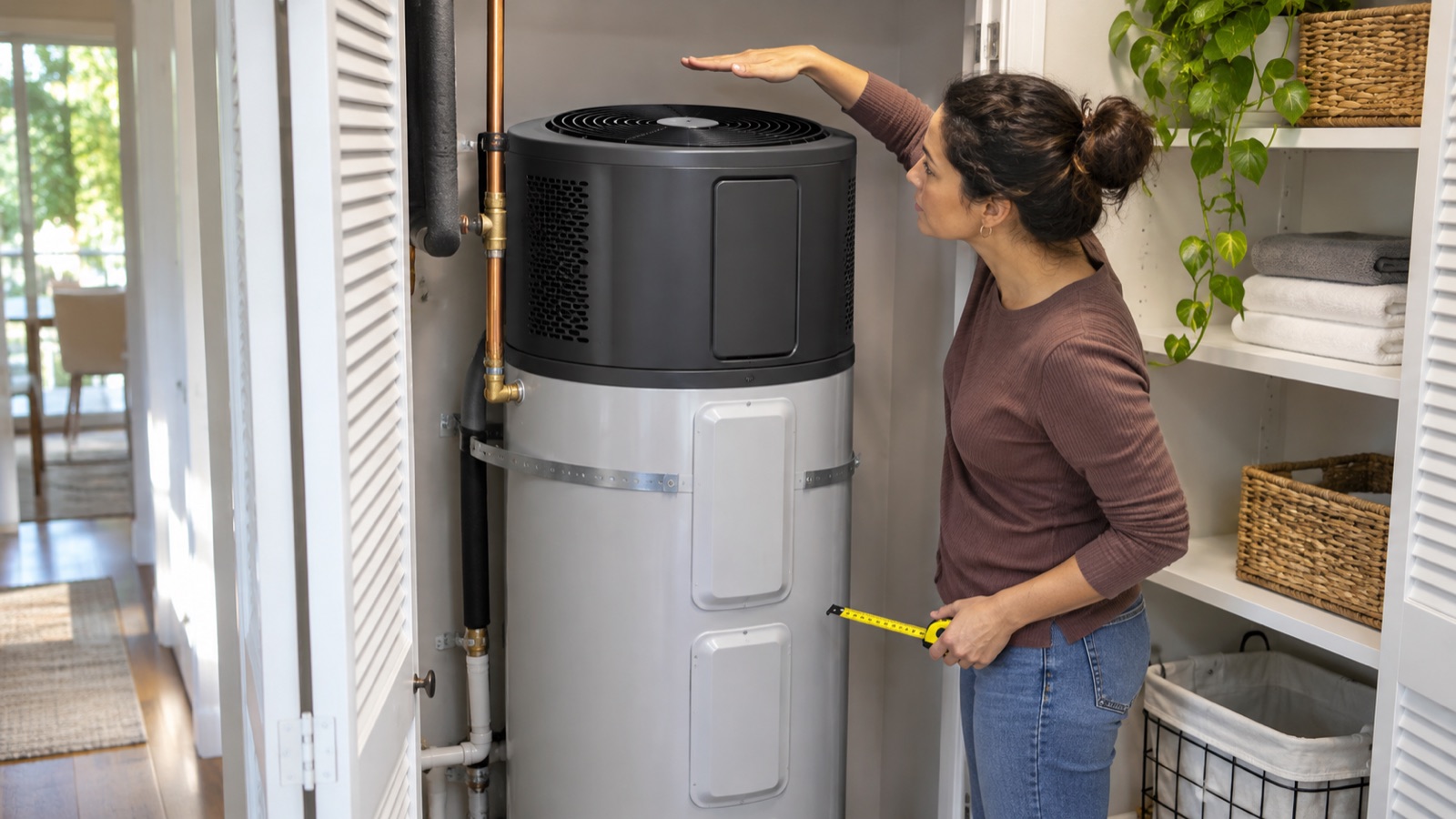
A heat-pump water heater can require electrical work, condensate drainage, space, airflow and service clearance. Some projects need a condensate pump or ducting. Ask for an itemized quote that includes removal and disposal, code compliance, electrical upgrades, plumbing modifications, permits, startup and warranty. The lowest hardware price may not represent the cost of a complete installation.
Ask whether the proposed location will become cooler or noisier and whether that affects conditioned living space. A basement, garage or utility room may be suitable only if it meets the manufacturer’s temperature and clearance limits. If the space is cold, the unit may operate differently; if it is inside conditioned space, the cooling effect could alter heating or cooling needs.
Build a conservative savings range
Model at least three scenarios: lower, expected and higher hot-water demand or efficiency. Use your current rate schedule and a realistic seasonal room temperature. Compute net installed cost after only confirmed incentives. If the project saves $0 in the conservative case, ask whether comfort, reliability, emissions or future gas/electric system choices still justify the cost.
Check simple payback against warranty and likely ownership period, then consider financing and discounting if the decision is material. A 5-year simple payback is not the same as a guaranteed 5-year return; rates, household routines and equipment performance can change. Record assumptions so you can later compare the first year’s actual kWh with the estimate.
A practical checklist
- Confirm existing heater type and measure a reasonable baseline before comparing.
- Get a complete installed quote with electrical, plumbing and condensate details.
- Verify room-temperature, airflow, clearance and noise requirements for the model.
- Check incentive terms directly and count only confirmed amounts.
- Run low, expected and high savings cases against warranty and ownership horizon.
Frequently asked questions
How much can a heat-pump water heater save?
ENERGY STAR provides average savings estimates for specified household assumptions, including an approximate figure for a household of four versus standard electric. Your result depends on baseline use, local rate, unit, room conditions and operating mode; treat the published number as context rather than a promise.
Does the room need to be warm?
The unit needs an environment within its installation specifications. Cold surroundings, low airflow or an unsuitable space can affect performance. Check the exact model manual and have an installer assess location and condensate needs.
How do I calculate payback?
Subtract the replacement’s estimated annual energy cost from the current heater’s cost, then divide net installed cost by the annual difference. Use local variable rates and confirmed incentives, and test a conservative scenario because future performance and prices are uncertain.
Sources and limits
Linked sources provide the basis for this guide. Check them directly for current information, and contact the appropriate utility, agency, or manufacturer about your situation.
For more bill context, read how to read your electric bill or track monthly usage.