LAUNDRY COSTS · BILLMELLOW GUIDE
Heat-Pump Dryer vs. Conventional Electric Dryer: Cost & Fit
BillMellow Editorial · Updated November 6, 2026
Compare heat-pump and conventional electric dryers by energy use, cycle time, venting, price and household electricity rate. Estimate payback without assuming one-size savings.
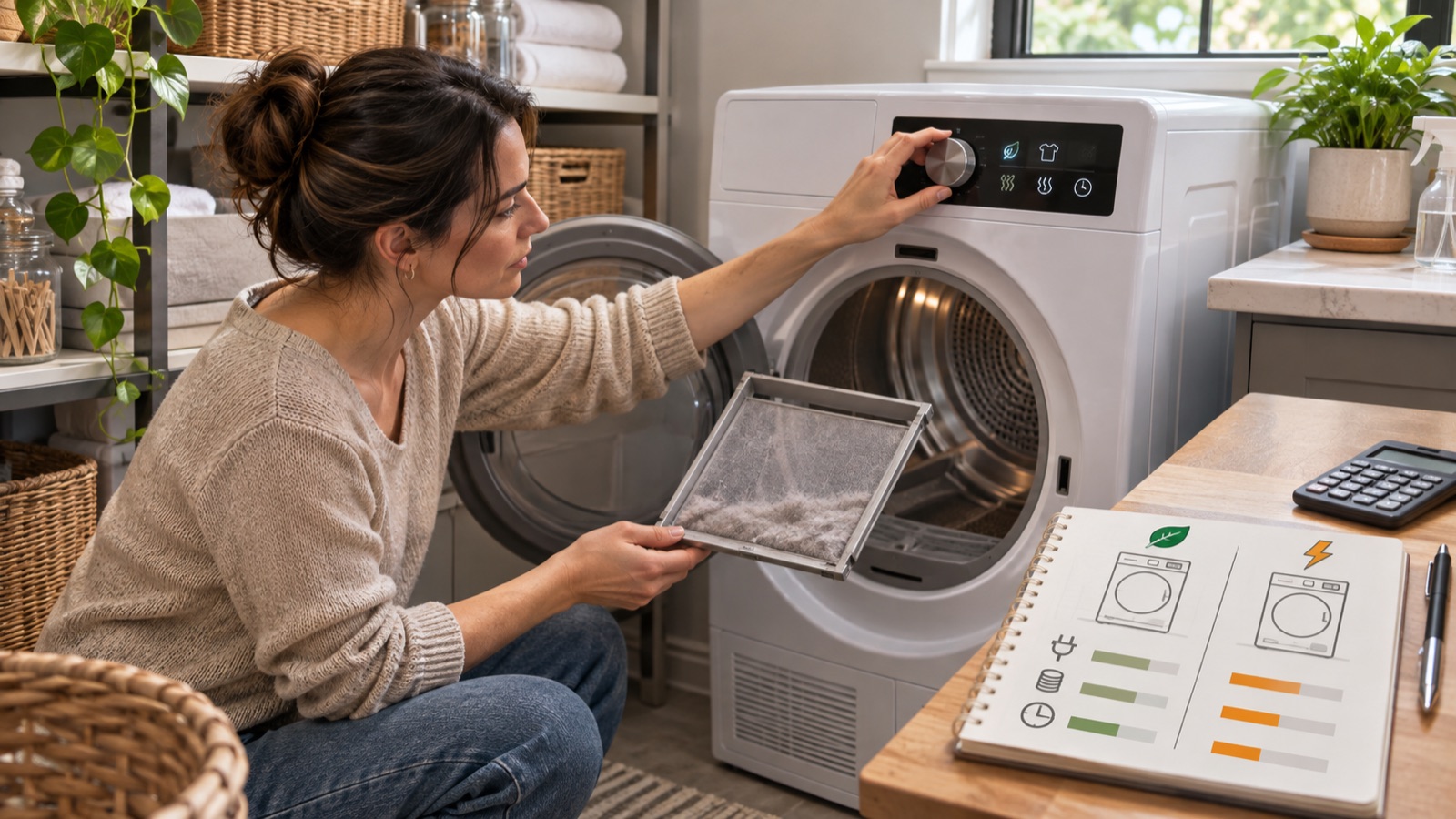
The calculation
Annual energy savings = loads per year × (baseline kWh per conventional load − heat-pump kWh per load) × your variable rate. Simple payback = incremental installed cost ÷ annual savings.
ENERGY STAR says certified heat-pump dryers use at least 28% less energy than standard dryers under program criteria. If a conventional dryer used 500 kWh/year, a 28% reduction would be 140 kWh; at an assumed 18¢/kWh, that is $25.20/year. This illustration applies the minimum reduction to an example baseline; actual models and laundry patterns differ, and payback may be long.
How the two dryer designs differ
A conventional electric dryer uses a heating element and typically exhausts warm, moist air outdoors. A heat-pump dryer recirculates air through a refrigeration cycle to remove moisture and reuse heat. Many heat-pump models are ventless, but they need a condensate drain or a container that must be emptied, depending on the design.
The different system can use less electricity while taking longer per cycle or operating at a lower temperature. That tradeoff may be useful for delicate fabrics, venting constraints or energy goals, but not every household will prefer the cycle time. Check capacity, real test data, noise, filter-cleaning steps and the manufacturer’s maintenance schedule.
Calculate the savings your home might see
Find your current annual dryer kWh from measurement or the model estimate. Estimate the replacement’s annual kWh using its label. Multiply the difference by your variable electricity cost. If you use a time-of-use plan, the cycle schedule matters. If your bill has usage-based delivery fees, include those consistently on both sides.
If a proposed dryer saves 140 kWh per year and your relevant variable cost is $0.18/kWh, energy savings are $25.20 per year. If the heat-pump model costs $500 more installed, simple payback is almost 20 years. That example is not a product quote; a household with more loads or higher rates could see a different result. Include maintenance and warranty in the decision.
Check installation and home fit
A ventless design can help in a location without an exhaust route, but it may need floor drainage or regular tank emptying. Confirm electrical requirements, door swing, room temperature and clearance. Some models need more cleaning of heat-exchanger filters than a conventional lint screen. A compatible outlet and safe installation are essential; do not assume an existing circuit meets the model’s instructions.
If the dryer sits in a cold space, check its permitted ambient temperature and operating performance. A heat-pump system may take longer in unsuitable conditions. Verify the installation location with the manufacturer before purchase, and ask about service access, drain routing and any required stacking kit. Replacement costs can include electrical, cabinet or plumbing changes beyond the sticker price.
A practical checklist
- Compare exact models with current EnergyGuide labels and similar capacity.
- Estimate annual loads and use the local variable rate, including applicable delivery.
- Check circuit, ambient temperature, drainage, clearances and maintenance.
- Calculate simple payback and test a low-load scenario.
- Verify current rebates and distinguish energy savings from convenience benefits.
Frequently asked questions
Are heat-pump dryers always cheaper overall?
They use less energy under certified comparison criteria, but purchase price, installation, cycle time, loads, rate and maintenance affect lifetime cost. Calculate your household-specific payback instead of assuming the lowest kWh means the lowest total cost.
Do heat-pump dryers need a vent?
Many models are designed to be ventless, but they need proper condensate handling and room clearance. Check the exact manufacturer instructions and local installation requirements.
Why can a heat-pump dryer take longer?
It may use lower-temperature, recirculated air to dry clothes while reusing heat. Load size, moisture, room conditions and selected program change duration. Compare a full representative load rather than only advertised cycle claims.
Sources and limits
Linked sources provide the basis for this guide. Check them directly for current information, and contact the appropriate utility, agency, or manufacturer about your situation.
For more bill context, read how to read your electric bill or track monthly usage.