ELECTRICITY GUIDE
How to Find the Electric Utility That Serves Your Address
BillMellow Editorial · Published November 12, 2026
Find the electric utility for a U.S. address using a recent bill, official state and local sources, and service-territory records before reporting an outage or asking about rates.
The company that sends your bill may not be the same organization that maintains the wires or handles a power outage. In some places, customers can choose a retail electricity supplier while a separate utility delivers service. Elsewhere, a municipal utility or electric cooperative handles both the bill and the local system. To find the right organization for an address, use the latest bill and confirm it against an official source. A ZIP-code search can be a starting point, but ZIP codes do not always match electric service boundaries.
Start with a recent bill
Look for the legal company name, service address, account type, outage number, and any separate supply or delivery sections. A bill may display both a retail supplier and a delivery utility. If you have moved, use the bill for the current service address rather than an old account or a mailing address. Do not post a bill online with the account number, meter number, barcode, or full service address visible. If the provider name is unclear, contact the number printed on the bill and ask which company handles outage reporting and which entity owns or operates the distribution system.
Use ZIP codes as clues, not proof
A ZIP code can cover multiple neighborhoods, and a utility territory can cross ZIP, city, or county lines. That is why a ZIP lookup may return a likely provider without proving service for a particular street or meter. A nearby home can have a different provider, especially near municipal boundaries or in areas served by cooperatives. Avoid choosing a utility solely because it appears in a commercial search result, maps listing, or rate-comparison page. Confirm the service address with an official utility or regulator.
Check official territory and regulator records
The U.S. Energy Information Administration publishes annual electricity data, including utility information. It can help identify entities and compare service-area context, but it is not a live address-level eligibility service. Your state public utility commission may publish regulated utility maps or a consumer-help directory. Municipal electric departments and cooperatives may be listed through city or cooperative sources instead. Check the date and scope of any map: some show counties or broad service areas rather than exact parcel boundaries.
Separate generation, transmission, and delivery roles
The word “utility” can refer to different organizations. A generation company may own power plants. A transmission operator moves bulk electricity. A distribution utility maintains local poles, wires, transformers, and meters. A retail supplier may sell the energy portion of a bill in a competitive market. One company may perform several roles, or several companies may appear on one account. For a power outage, contact the distribution utility or the official outage line. For a supply contract, contact the retail provider named in the applicable agreement and verify any cancellation or renewal terms there.
When setting up a new address
Before a move, ask the landlord or prior owner which company serves the property, but verify it yourself. Call the number on a current bill if available, or use the regulator, municipal department, or cooperative’s official contact page. Confirm service start dates, deposits, required identification, and whether a separate supplier choice is available. Do not pay a deposit through a link in an unsolicited text. If a caller demands payment to prevent an immediate shutoff, hang up and contact the company using a verified number from a bill or official site.
If the address lookup disagrees
If an online map names one provider but a bill names another, check the service address, meter identifier through a private channel, and date of each record. Ask the utility to confirm the distribution territory for the exact address. If the dispute affects a deposit, shutoff, or service start, request a case number and written explanation. Your state regulator can explain whether it handles complaints for that entity; municipal utilities and cooperatives may have different complaint routes. Never share sensitive account details with a directory or third-party lookup site unless you have verified why it needs them.
Keep the result current
Save the utility’s official customer-service and outage links in your household records. Recheck the contact when you move or when a bill shows a different company. Company names, phone numbers, and service arrangements can change through mergers, municipal transitions, or new retail contracts. A search result or static map may be outdated. BillMellow does not determine service eligibility or provide a guaranteed address-level utility match; the responsible utility or regulator is the authoritative source for a specific meter.
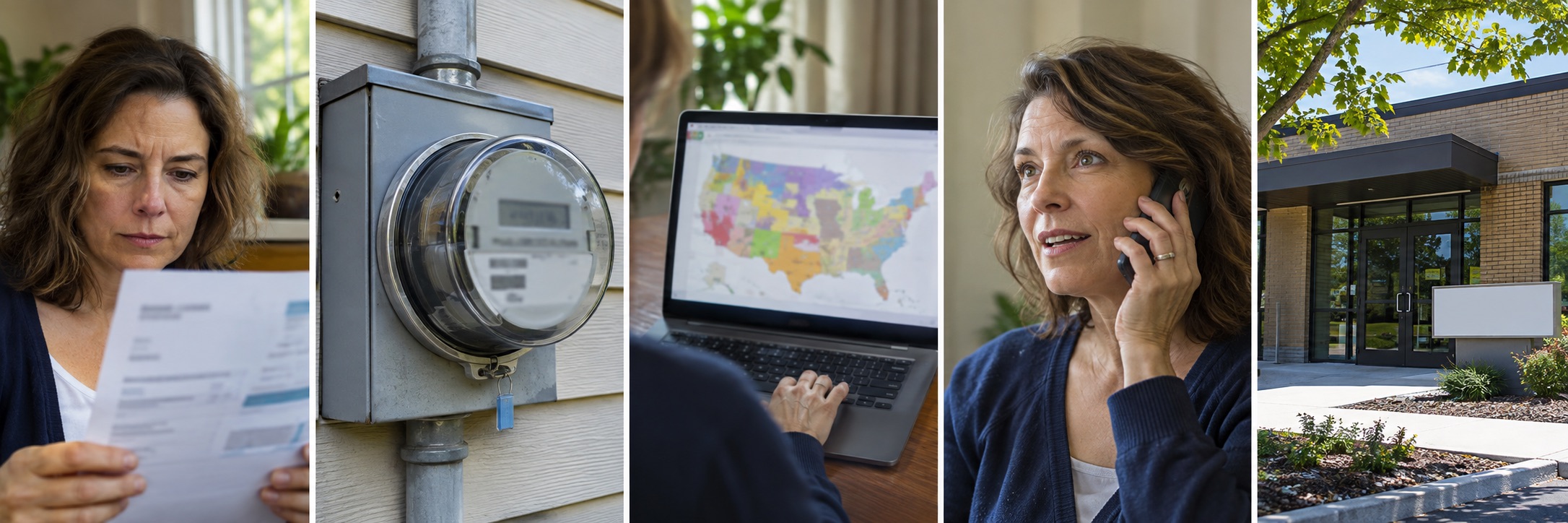
Keep the decision grounded in your own home
Start with the service address and the role you need identified: the company that maintains wires, the retail supplier on a competitive-market account, or the organization that handles outage calls. A city boundary or search result alone may not identify the provider for a specific meter. Confirm the answer through an official customer channel.
Separate facts from assumptions
Treat EIA utility data, regulator maps, and third-party address tools as territory clues, not proof that a specific address can open an account with that provider. Record the source and date, then ask the utility to verify service territory and start-service requirements for the exact address privately.
A practical record to keep
Save the utility’s official name, outage and customer-service links, the date and method used to verify service, and any service-start case number. Keep account and meter identifiers private. If a landlord or prior owner supplies a provider name, note it as a lead until the utility confirms it.
Common mistakes to avoid
Do not assume the retail supplier and local delivery utility are the same company. Do not use a meter number or full address in a public forum. Do not rely on an old map for a move-in or emergency decision; service arrangements and company names can change.
A short next-step checklist
- Identify whether you need the delivery utility, retail supplier, or outage contact.
- Check the regulator, municipality, cooperative, or utility’s official directory.
- Contact the provider through a verified channel with the service address.
- Confirm start dates, deposits, supplier choice, and outage reporting separately.
- Save the verified contact and any case number for future reference.
Frequently asked questions
Can I identify a utility with only a ZIP code?
A ZIP code can narrow the search, but utility territories do not always follow ZIP boundaries. Confirm service for the exact address through the utility or local authority.
Is the electric supplier the same as the delivery utility?
Not always. In some markets a retail supplier sells energy while a separate utility delivers it and handles outages. Verify each role on the bill or with the regulator.
Should I post my full address to get help?
No. Contact the utility through an official private channel and avoid sharing account, meter, or full-address details publicly.
Sources and scope
This article is general U.S. consumer education, not an electrical design, legal opinion, emergency dispatch service, or utility quote. Read the primary-source material linked in the relevant section and confirm local requirements before acting. Official guidance can change; check the publication and revision dates on the source page.
Primary sources: EIA Form EIA-861 data on utilities and service areas and your state public utility commission or local government utility directory.
All electricity guides · Compare plan costs · Methods and limits · Editorial standards