EV OWNERSHIP · HOME ENERGY
How much does it cost to charge an electric car at home?
BillMellow Editorial · Updated October 31, 2026
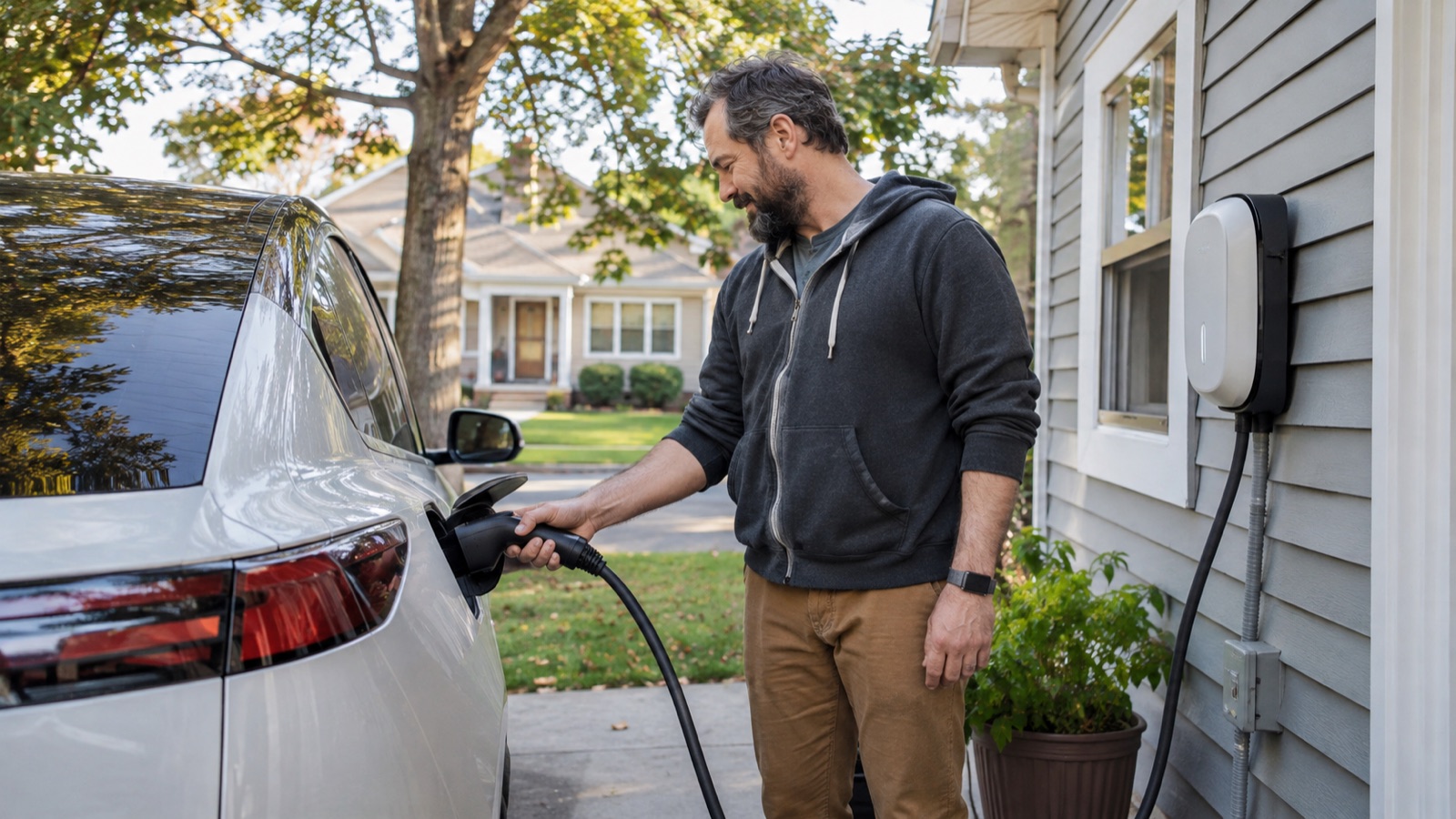
Use your monthly mileage, the vehicle’s electricity use and the variable electricity price on your bill to estimate home charging cost. This estimate is tailored to your inputs; it is not a live quote from your utility.
YOUR NUMBERS · PRIVATE IN THIS BROWSER
Estimate your monthly charging cost
Use the vehicle’s listed kWh per 100 miles when available. For the rate, use the variable price you actually pay per kWh—not the total bill divided by kWh if fixed fees and taxes are included.
Enter your own values to see an estimate.
Illustration starts at 1,000 miles, 30 kWh/100 mi, 90% wall-to-battery efficiency and $0.18/kWh. Change every value to match your situation. The calculator runs on this page and does not upload these inputs.
A FAIRER COMPARISON
EV vs. gas: compare cost per 100 miles
The EV side uses the inputs above. Enter the gasoline car’s real-world MPG and the price you pay per gallon. This compares energy/fuel only; it does not include vehicle price, insurance, maintenance, public charging or charger installation.
- EV home charging
- $—
- Gasoline
- $—
- Monthly difference at your mileage
- —
- Annual difference if this month repeats
- —
Illustrative gasoline inputs: 30 MPG and $3.50 per gallon.
The quick formula
Monthly cost = monthly miles ÷ 100 × vehicle kWh per 100 miles ÷ charging efficiency × electricity price per kWh.
For example, with 1,000 miles per month, 30 kWh/100 miles, an assumed 90% wall-to-battery efficiency and an illustrative $0.18/kWh rate, the estimate is about 333 kWh from the wall and $60 for the month. Change the efficiency and rate assumptions to see how your result moves. This covers the estimated energy for charging only.
For a fuel-only comparison, gasoline cost per 100 miles is 100 ÷ MPG × price per gallon. Compare that with the EV’s estimated wall electricity cost per 100 miles. Because prices, driving patterns and rated efficiency vary, enter your own figures instead of relying on a national average.
Find the right electricity price
Look for the per-kWh energy price on your current bill or utility rate schedule. Some bills separate supply from delivery; others combine or label charges differently. If your plan changes its price by time of day, use the rate for the hours when your car charges, or calculate a weighted average from the hours you use.
Fixed monthly charges, taxes, credits and demand charges can change your total bill. They are not automatically included in this energy-only estimate. Read our guide to understanding bill charges and our walkthrough of time-of-use rates before comparing plans.
Use vehicle energy consumption, not battery size
Battery capacity tells you how much energy a battery can store; it does not tell you how much electricity you will buy for every 100 miles. Vehicle efficiency is a better input for a driving-based estimate. The U.S. Department of Energy’s Alternative Fuels Data Center explains the cost-per-mile calculation using kWh per 100 miles and a price per kWh. Look up model-specific consumption with FuelEconomy.gov’s vehicle comparison tool or the vehicle’s own energy display, then adjust for your driving conditions.
Why your real bill can differ
- Your actual miles and driving efficiency may differ from the inputs or published rating.
- Energy is lost between the wall outlet and the battery. The efficiency field lets you account for this; 90% is only a starting assumption, not a measurement of your charger.
- Charging at different hours can change the price on a time-of-use plan.
- Some utilities offer EV-specific rates or incentives, but availability and eligibility depend on the provider and service address.
For a whole-home comparison, enter the same billing period in BillMellow’s two-bill comparison and review how total usage and charges changed. Our tool does not currently retrieve live ZIP-code-specific EV rates or confirm that a plan is available at your address. Verify current terms with your utility before changing plans.
Still deciding whether an EV fits your needs? Read our practical EV buying guide for a balanced cost and charging checklist.
Sources and method
The formula follows the U.S. Department of Energy Alternative Fuels Data Center’s explanation of EV electricity cost per mile. Charging efficiency is an editable assumption because household equipment, vehicle and charging conditions vary.
U.S. DOE Alternative Fuels Data Center: Charging Electric Vehicles at Home
U.S. EPA / DOE FuelEconomy.gov: Compare vehicles
U.S. Energy Information Administration: Measuring electricity
Estimate charging from energy, not miles alone
A first estimate uses the vehicle’s energy use per mile, miles driven, and the home electricity rate. If you know only charging power and hours, multiply kW by hours for energy delivered, then account for charging losses if you want a closer estimate. Vehicle efficiency varies with speed, temperature, terrain, tires, cabin heating or cooling, and driving style, so use the car’s own trip or charging records when available.
Check whether your utility has a residential time-of-use rate, EV charging plan, separate meter, or enrollment requirement. Compare the same monthly mileage under the current rate and proposed plan, including monthly fees, peak rates, enrollment conditions, and any departure from a flat rate. A lower overnight price does not guarantee a lower household total if other use moves into a more expensive period.
Compare the whole ownership situation
For an EV-versus-gas comparison, use the same distance and a realistic fuel price, vehicle efficiency, and charging mix. Public fast charging may cost more than home charging and may be needed on trips. Installation of a home charger, electrical-panel work, parking access, and landlord approval can also affect cost or feasibility. Keep equipment and vehicle purchase costs separate from the monthly energy estimate.
BillMellow’s estimate is a scenario built from your inputs, not a live utility quote or a guarantee of savings. Confirm the rate on the current rate schedule and use the vehicle manufacturer’s or your measured efficiency data before making a purchase decision.