ELECTRICITY GUIDE
How Much Does It Cost to Use an Electric Oven?
BillMellow Editorial · Published November 7, 2026 · Updated November 10, 2026
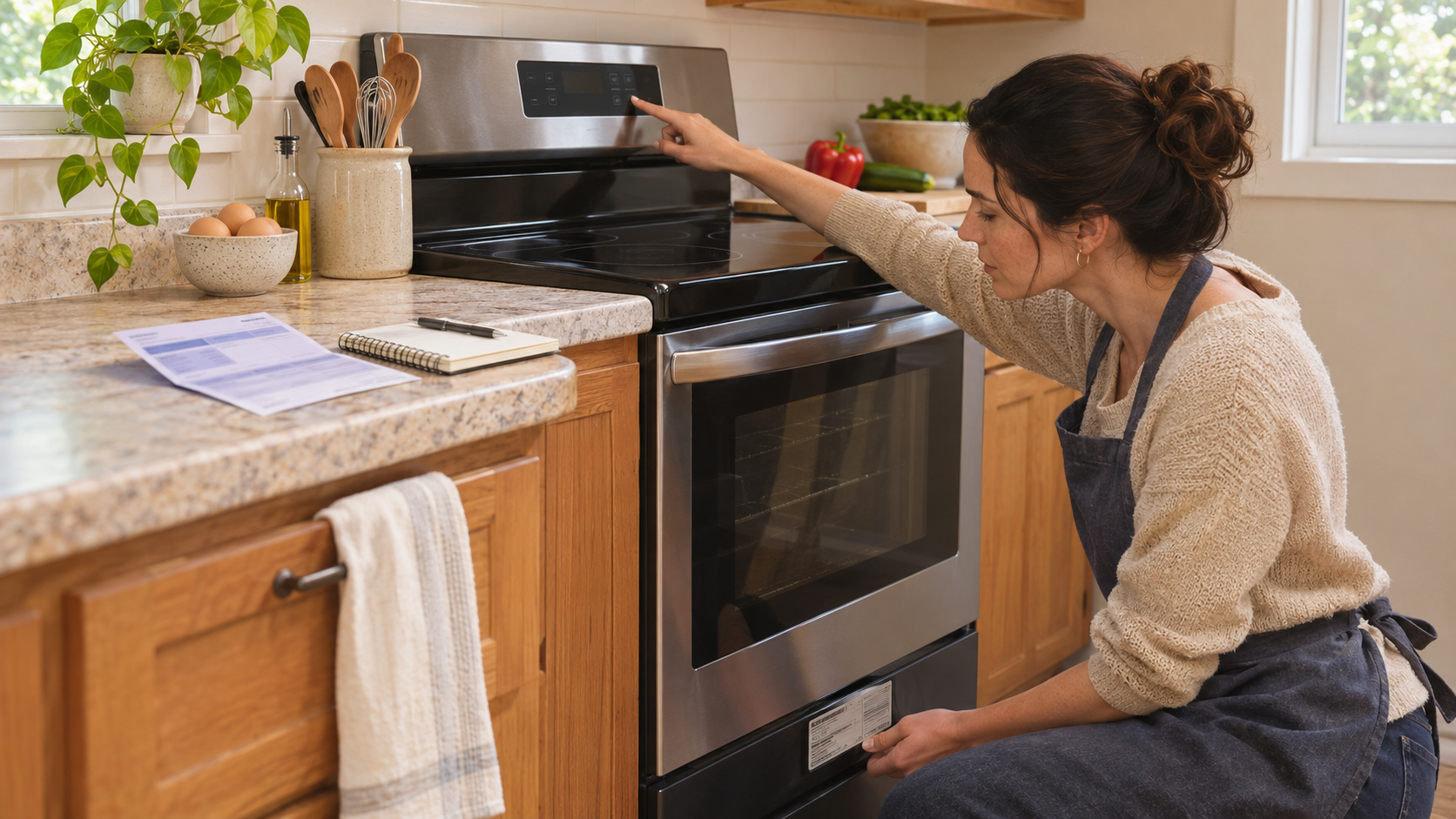
Work out an electric oven’s energy cost per use from its electrical input, heating time, actual cycling, and the variable electricity price on your bill.
Estimate an appliance's electricity cost
An electric oven’s cost depends on the electricity it uses during preheat, cooking, and any time it stays on between meals. The rated watts on the appliance are useful, but the heating elements cycle to maintain temperature, so a simple calculation that assumes full power for the entire cooking time can overstate actual energy. For the closest household estimate, measure a representative cooking cycle or compare a dedicated meter reading before and after several normal meals.
Estimate energy from power and time
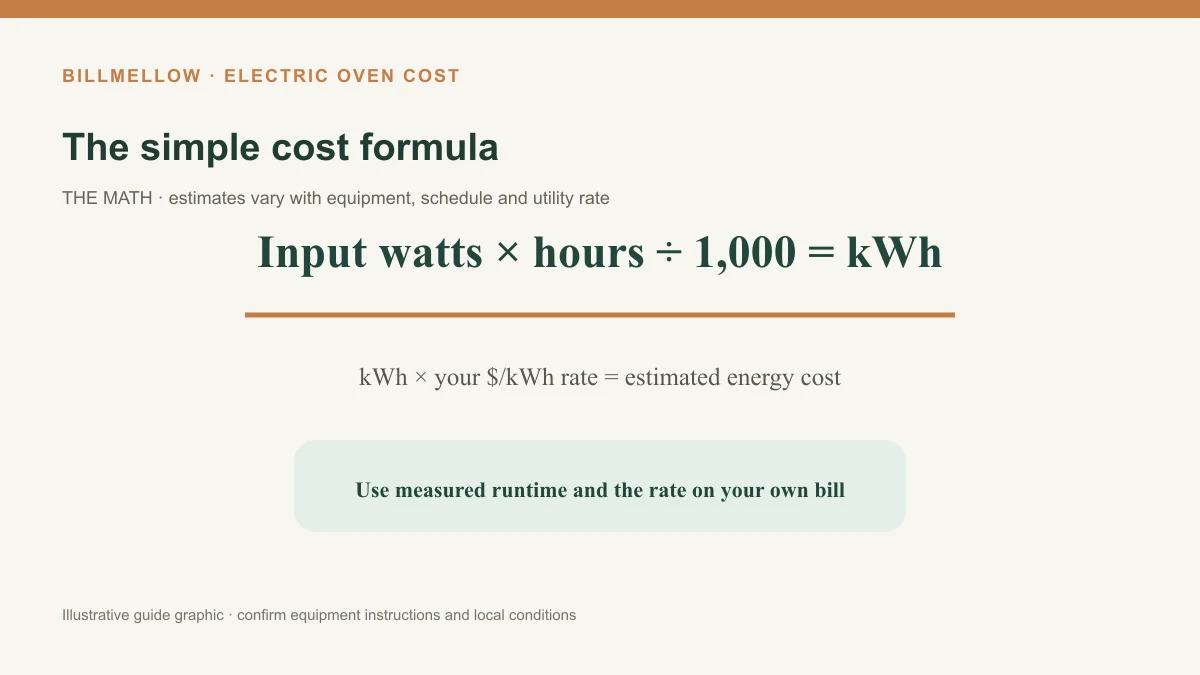
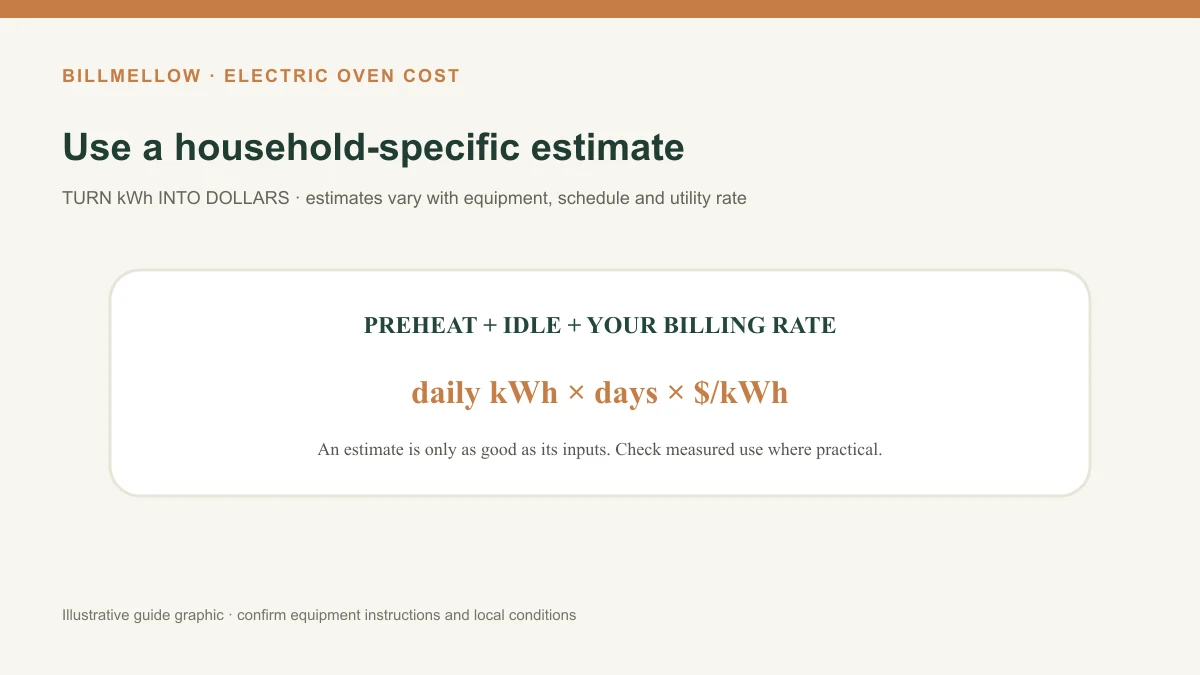
The basic equation is watts × hours ÷ 1,000 = kilowatt-hours (kWh). If an oven draws 2,000 watts for a combined 30 minutes of full-power operation, that scenario is 1 kWh. Four such uses each week would be about 17.3 kWh over an average month (1 × 4 × 4.33). At an illustrative marginal price of $0.18 per kWh, the energy portion would be about $3.11. This is a made-up example to demonstrate the arithmetic. It is not an average oven cost or a measurement of your appliance.
Why a rating does not equal continuous draw
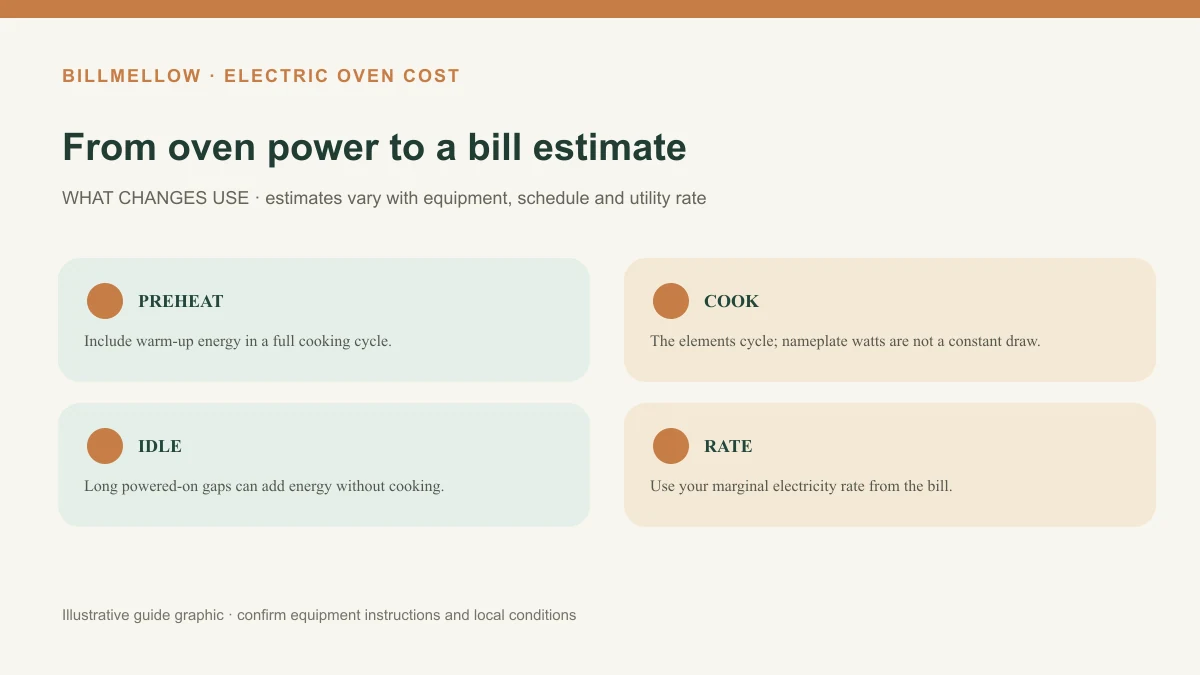
Many ovens use heating elements controlled by a thermostat. The elements cycle on and off after preheating, and the time they are energized depends on set temperature, cookware and food load, door openings, insulation, calibration, and the room. A nameplate value may describe a maximum input or circuit requirement. It should not automatically be multiplied by every minute the oven is switched on. The door display, clock, and controls can also use small standby power depending on the model; separate that from the main cooking load if you are measuring it.
Preheat energy is part of a real meal, while idle time is energy used after the oven reaches temperature but before the next item goes in. If meals are separated by a long interval, powering the oven continuously during that gap may add use without cooking. Follow the manufacturer’s instructions for safe operation, preheating, and shutdown; do not disable a safety control or use an oven as a space heater. If you cook multiple items at once, keep food-safety and recipe requirements in view rather than assuming every recipe can share one temperature.
Compare cooking modes carefully
Convection circulates hot air and may change cooking time or temperature for some foods, but it does not guarantee the same percentage of savings in every kitchen. Recipes, load size, oven design, and cooking time matter. A smaller countertop appliance can use less energy for a small meal because it heats a smaller space, yet the result depends on the unit and task. Compare measured kWh for the same kind of meal and a similar quantity of food instead of comparing the wattage labels alone.
Do not open the oven repeatedly to check food; a door opening releases heat and may extend cooking time. Keep the gasket and door area clean as described in the manual, and avoid lining a self-cleaning oven or blocking ventilation unless the manufacturer permits it. If the oven takes much longer than expected, has a damaged seal, overheats, or trips a breaker, stop relying on a cost estimate and have the appliance checked by a qualified technician.
Measure a representative set of meals
A dedicated appliance meter is only appropriate if it is designed for the oven’s voltage and current. Many built-in ovens are hardwired or use a high-power circuit; ordinary plug-in monitors are not suitable. Do not move the oven or access wiring to install a meter yourself. A qualified electrician can advise on a safe circuit monitor. If no dedicated measurement is practical, use an energy monitor at the home service or compare utility meter readings across several similar periods while accounting for other loads.
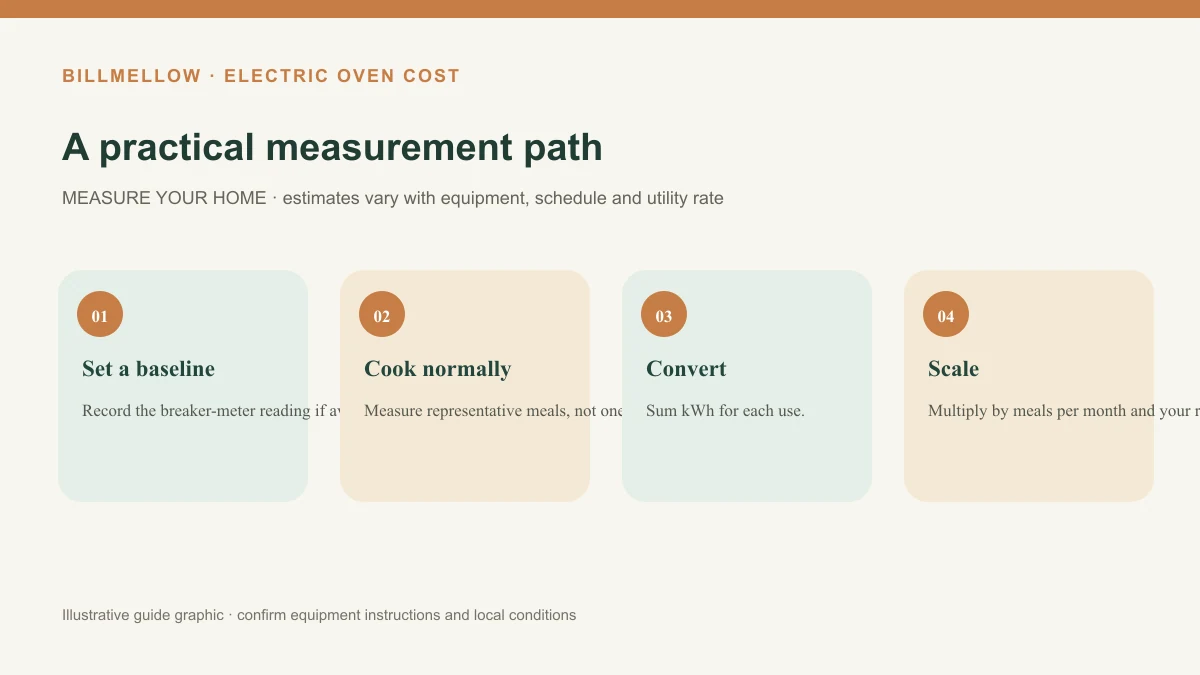
Write down the meal, cooking mode, preheat time, total time at temperature, and any idle delay. Repeat the same general meal a few times because one short cycle may be noisy. If you are comparing a conventional oven with convection, keep the food amount and doneness target alike and follow the recipe’s mode guidance. The goal is to find a useful household range, not to make a universal appliance claim.
Convert the measurement into a bill estimate
Suppose the oven uses 1.6 kWh across four ordinary meals. If that set represents one week, multiplying 1.6 by 4.33 gives roughly 6.9 kWh in an average month. At an illustrative marginal rate of $0.18 per kWh, the variable energy estimate is about $1.24. A different schedule or longer cooking time will change it. If the household cooks much more on weekends, measure a full week rather than applying a weekday-only average.
Use the variable per-kWh price from your own tariff, including applicable supply and delivery rates. Fixed monthly charges do not change because you cooked another meal, while time-of-use periods or tiers may make the price differ by hour or usage level. The total bill divided by kWh is an average price and may be a poor estimate of the next kWh. BillMellow’s guide to electric bill charges explains the distinction.
Check a bill change without blaming the oven too soon
A higher electric bill can reflect more billing days, heating or cooling, water heating, a rate change, or another appliance. Compare kWh per day as well as the total. If you changed oven use, compare the same weeks and note cooking hours, but do not assume a household bill increase came from the oven alone. The U.S. Department of Energy explains how electricity use is expressed in kWh in Electricity 101 and publishes information about conventional cooking products. Its appliance test procedures describe standardized lab methods, not the exact use of your meals.
For a broader estimate, read BillMellow’s appliance electricity guide and use the electric bill comparison tool to see whether kWh, days, or charges changed. This page estimates energy cost from household inputs and does not replace a product manual, wiring advice, or an appliance safety inspection.
All electricity guides · Compare plan costs · Methods and limits · Editorial standards