ELECTRICITY GUIDE
How Much Does It Cost to Run an Electric Fireplace?
BillMellow Editorial · Published November 15, 2026
Estimate electric fireplace cost from its heater wattage, thermostat cycling, daily hours, and your electric rate. Separate flame-only mode from heat and avoid assuming whole-home savings.
Estimate an appliance's electricity cost
Know which mode is running
An electric fireplace can show a flame effect with the heater off, provide heat, or run both features together. The decorative flame effect may draw far less power than the heating element, but the exact figure is model-specific. Look at the owner’s manual or rating label for input watts in each mode. Do not treat the fireplace’s advertised heating area as its electrical use: room size, insulation, outdoor temperature, thermostat setting and equipment condition affect how long the heater runs.
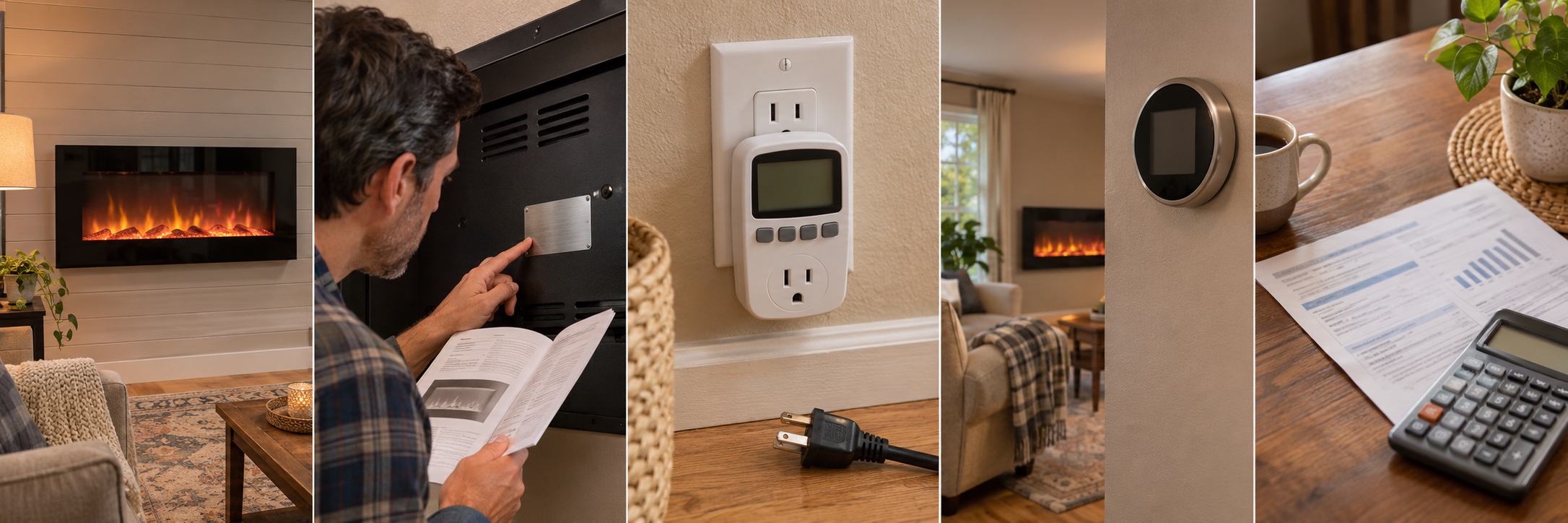
Estimate the maximum heating load
A common room-heater example is 1,500 watts, but fireplace models vary and the label is authoritative. Convert the listed watts to kilowatts, multiply by the hours it is actually heating, then multiply by the variable energy rate. If a 1,500-watt heater ran continuously for four hours a day over 30 days, it would use 1.5 × 4 × 30 = 180 kWh. At an illustrative 18 cents per kWh, the energy portion would be $32.40. That is a full-on example; it is not a universal monthly bill prediction.
If a thermostat cycles the element, full rated wattage multiplied by wall-clock hours overstates use. Estimate the fraction of time the element is on, or measure a representative period with an energy meter approved for the load and used according to instructions. For example, a two-hour evening session with the heater on half the time is approximately one equivalent full-power hour. If the manual provides a measured consumption figure for the mode, use that instead of guessing.
Do not mix flame-only and heating hours
Write down the time in each mode. A flame-only setting, a heat setting on low and a heat setting on high can have different input loads. If the fireplace’s label lists several wattages or amperages, match the estimate to the selected heat level. If the controls change output automatically, the actual energy use may vary with the room temperature and thermostat behavior.
A practical log can be simple: date, mode, start and stop time, thermostat setting, and whether another heating system was also running. Repeat the calculation on a cold day and a mild day if the room’s heating demand changes seasonally. For a plug-in model, only use the electrical connection specified by its manufacturer. For a hardwired unit, do not open the housing or modify the circuit to measure it; consult a qualified electrician.
Compare the fireplace with your usual heating
A fireplace that warms one occupied room may let someone lower a central thermostat, but that does not automatically mean the whole home uses less energy. Savings depend on whether the main system’s output falls, the area kept comfortable, the fireplace’s runtime, the energy prices for both systems, and how the rest of the home is heated. If the central system continues to maintain the same temperature everywhere, the fireplace may add consumption rather than replace it.
To evaluate the change, compare similar weather periods and note daily electric kWh, natural-gas or other fuel use, thermostat settings and occupancy. A short before-and-after comparison is noisy when temperatures or routines differ. For a gas furnace, include gas cost as well as electricity for the blower and controls. Use the same comfort area and time period when comparing alternatives; do not compare a single fireplace hour with whole-house heating for an entire day.
Translate the estimate to your statement
The watt-hours-to-kWh calculation estimates energy consumption. Your bill may also include fixed customer charges, delivery, taxes, riders, fuel adjustments, credits or time-of-use pricing. If the fireplace runs during a peak period, a time-varying rate can matter more than a flat average. Use the current plan document and bill to identify the correct variable price and any peak windows. BillMellow’s calculators use entered assumptions; they do not retrieve your fireplace’s telemetry or confirm your provider tariff.
Choose an appropriate measurement method
The best measurement is often a full heating cycle that resembles normal use. For a cord-and-plug device, use only a meter rated for the device voltage and current. Follow both product manuals and stop if the plug or outlet becomes unusually warm, discolored, loose or smells hot. Do not use an extension cord or power strip if the manufacturer requires direct connection; CPSC warns that high-wattage heaters can overload them. A plug-in meter that is not rated for the heater is not a safe measurement tool.
For a built-in unit, use the nameplate, circuit documentation and a licensed electrician’s guidance. Avoid improvised clamp readings or opening a live panel. If the breaker trips, the cord is damaged, or the outlet shows heat damage, discontinue use and get the electrical system checked.
Use it as supplemental heat, with realistic expectations
An electric fireplace may improve comfort in a particular room, but its annual cost depends on the climate, building envelope, thermostat setting, use schedule and electricity price. It is not an insulation upgrade and cannot explain a bill increase by itself. Seal air leaks and use equipment safely; do not block vents or place combustible material near a heating appliance. Follow the manufacturer’s clearances, maintenance, cleaning and safety directions.
Keep a copy of the manual and record the model number. If you suspect a rising bill, compare two statements by billing days and kWh per day before changing equipment. The fireplace estimate can then help test one possible source against the broader household total.
How much does a 1,500-watt electric fireplace cost per hour?
At full output, multiply 1.5 kW by your energy price. At an example $0.18/kWh, that is $0.27 per full-power hour before other bill charges. The actual heater may cycle or use a different wattage, so check the model label and operating mode.
Does flame-only mode use zero electricity?
Usually the display and lighting still need power, but the amount varies by model. Check the manual for flame-only consumption rather than assuming it is zero or equal to heating mode.
Will an electric fireplace lower my heating bill?
Not automatically. It may help if it replaces central heating in a smaller occupied zone and the thermostat is lowered appropriately, but it can increase total use if the main system continues unchanged. Compare similar weather and include fuel and electric costs.
Can I plug it into a power strip to measure it?
Only follow the fireplace and meter instructions. Many high-wattage heaters must be plugged directly into a wall outlet; CPSC cautions against using extension cords or power strips for portable heaters. Never use a meter or cord that is not rated for the load.
Why is the bill higher than the kWh calculation?
The example covers the appliance’s energy charge only. Fixed fees, delivery charges, taxes, riders, rate timing and other household use can affect the bill total.
Sources and limits
A fireplace's exact power use depends on its model and selected mode; use its own label and manual. CPSC's home-heating safety guidance includes electric-heater precautions such as plugging portable space heaters directly into a wall outlet. Follow your fireplace maker's instructions, which may be stricter. Check current CPSC recalls and product safety warnings for your model. This energy estimate does not establish that a product or installation is safe.
Compare another heating estimate
See the 1500-watt space heater cost guide and the electric furnace cost guide for different equipment and assumptions. For your own whole-home statement, use the bill comparison tool.
All electricity guides · Compare plan costs · Methods and limits · Editorial standards