ELECTRICITY GUIDE
Electric Blanket Electricity Cost: Estimate kWh per Night
BillMellow Editorial · Published November 9, 2026
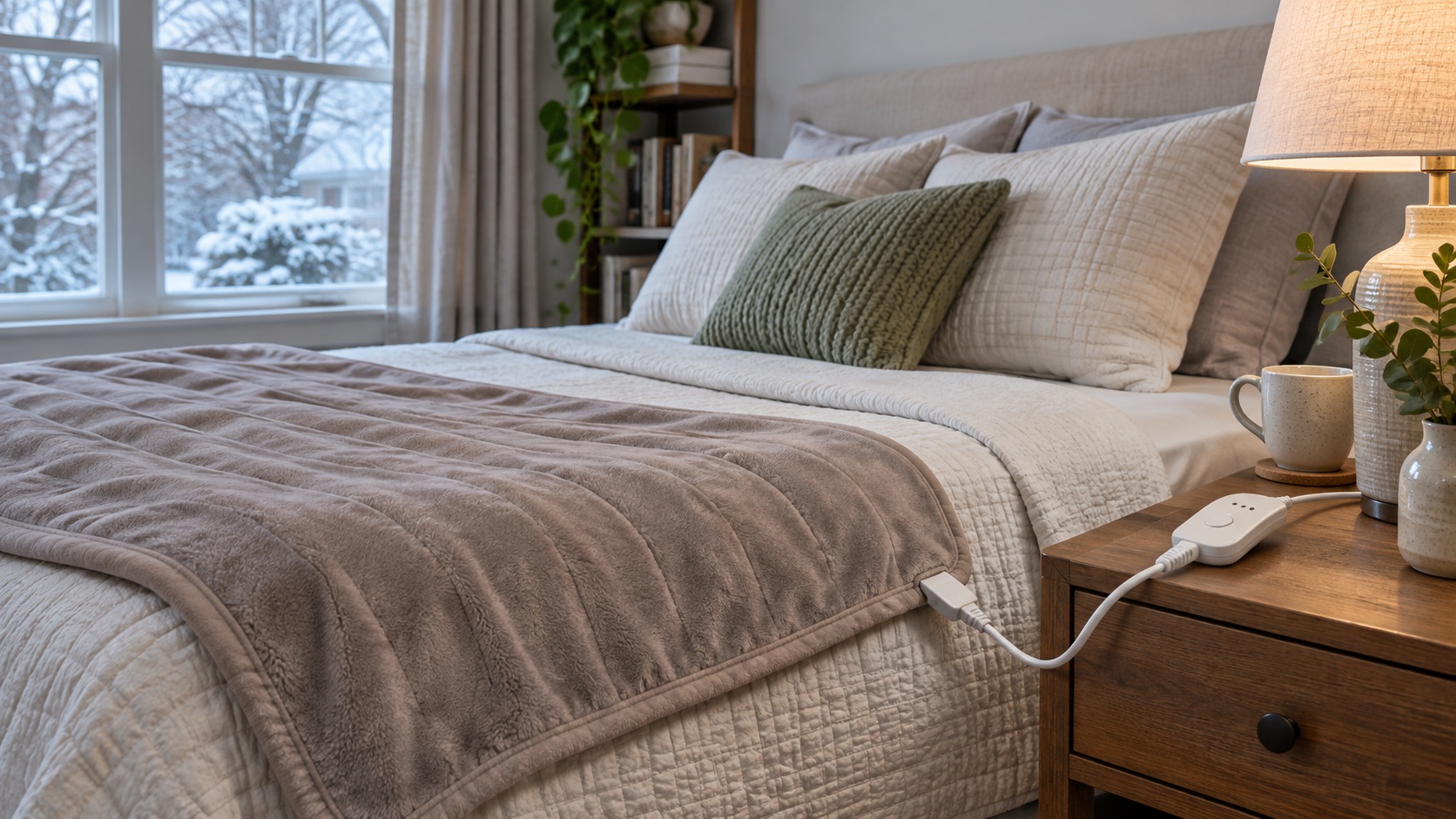
Estimate electric blanket electricity cost from measured average watts, hours per night, and your rate. Includes a clear example and current product-safety checks.
Estimate an appliance's electricity cost
An electric blanket's running cost depends on the power it uses at the setting and stage you actually choose, plus the hours you use it. The number on a product label is not automatically its average draw: a thermostat may switch heating on and off, and different settings change use. The fairest estimate uses measured kWh or a clearly labeled assumption.
Use watts, hours, and your electricity rate
For a steady average draw:
- Energy (kWh) = watts × hours ÷ 1,000
- Monthly cost = monthly kWh × the price that applies to extra usage
If you measure a whole-night cycle, use the kWh reading for that cycle directly instead of guessing that the blanket draws its full rated watts all night. For a plan with time-of-use prices, use the rate for the hours when the blanket is on. A bill's all-in average may include fixed fees that do not increase when the blanket runs, so it may not equal the incremental cost.
A worked example using an assumed average
Suppose a blanket averages 60 watts while warming a bed for 6 hours each night over 30 nights. The 60 W figure is an illustrative measured average, not a typical value or a product specification.
- Per night: 60 W × 6 h ÷ 1,000 = 0.36 kWh
- 30 nights: 0.36 × 30 = 10.8 kWh
- At an illustrative rate of $0.18/kWh: 10.8 × $0.18 = $1.94
If the blanket averaged 120 W over the same hours, the estimate would be twice as much: 21.6 kWh and $3.89 at the same example rate. If you used it for 3 hours rather than 6, the estimate would be half, assuming the average watts stayed the same. These arithmetic examples show how to apply your own measured power; they do not predict a specific blanket's draw.
Measure a normal heating cycle
A rated plug-in energy monitor may work with some cord-connected blankets, but verify that the monitor is designed for the appliance and follow both manuals. Never place a meter or adapter where it could be crushed, overheated, or damaged. If you cannot safely measure the blanket, use the manufacturer-provided watt rating as a maximum scenario and label the result as an upper-bound estimate rather than average use.
For one sample night, note the selected setting, total hours, and kWh recorded. Repeat across several representative nights because a room's starting temperature, bedding, thermostat cycling, and chosen setting can change the result. To estimate monthly energy, multiply the average kWh per night by the number of nights used. To estimate cost, multiply that kWh by your usage-based rate for those hours.
A blanket that preheats for 30 minutes and then maintains temperature may not draw its rated maximum continuously. Conversely, a high setting or cold room may keep the heating element active longer. Do not infer the duty cycle from the control's number alone; use measured kWh or the manual's documented test conditions.
Keep electricity savings separate from comfort and safety
The calculation only describes the blanket's plug load. It does not tell you whether lowering a central thermostat is safe or comfortable for your household, and it does not estimate the energy use of the heating system. A targeted bedding device and whole-home heating are different loads; compare their actual use, not just their watt labels.
Use the product exactly as its manufacturer directs. Inspect the blanket, controller, cord, and connector for wear or damage; stop using a product with frayed wiring, scorch marks, or a failing connector. Keep cords away from pinching and moisture. Do not fold, bunch, or cover a blanket contrary to its instructions. Keep controls accessible and turn the unit off as required by the manual.
Product-specific recalls matter. In 2026 the U.S. Consumer Product Safety Commission warned consumers to stop using certain named electric blanket products because of reported overheating and fire or burn hazards. This warning does not mean every electric blanket is affected. Check the exact brand and model against the current CPSC recall and warning database before using a recalled product; follow the CPSC's instructions if your model is listed. CPSC also publishes a home electrical safety checklist that discusses electric blanket condition and use.
Frequently asked questions
Does an electric blanket use a lot of electricity?
The answer depends on its measured average watts and run time. Under the illustrative 60 W, six-hour, 30-night example, use is 10.8 kWh. Your model and setting may differ substantially.
Can I multiply the label watts by 8 hours?
That produces a maximum-style estimate if the heating element drew that power continuously. Thermostat cycling can lower actual use, so call it an assumption and do not present it as a measurement.
What rate should I use?
Use the variable price that applies to those additional kWh and hours. Keep fixed monthly charges separate; if you do not know the marginal charge, show a range or use BillMellow's bill comparison tool to inspect your actual charges.
Will a blanket lower my heating bill?
It may change how you choose to heat your home, but a blanket's electricity cost alone cannot establish net savings. Whole-home heating depends on equipment, weather, thermostat settings, and household needs. Measure both loads and avoid claims based on a universal temperature change.
For a basic watts-to-kWh refresher, see BillMellow's appliance energy use guide and calculation methodology.
All electricity guides · Compare plan costs · Methods and limits · Editorial standards