ELECTRICITY GUIDE
DOE’s 2026 Midwest Power Order: What Electric Customers Should Know
BillMellow Editorial · Published November 15, 2026
The DOE emergency order for Michigan’s Campbell Plant runs November 15, 2026 through February 12, 2027. Here is what the notice does—and does not—say about household bills.
Compare electricity plan costs
The order is limited to a specific plant and period
The U.S. Department of Energy announced an emergency order concerning the J.H. Campbell Generating Plant in West Olive, Michigan. DOE states that the order is in effect from November 15, 2026 through February 12, 2027, directing the Midcontinent Independent System Operator (MISO), in coordination with Consumers Energy, to ensure the plant is available to meet emergency needs while using economic dispatch to minimize costs. The announcement describes a regional reliability action; it is not a new nationwide household electricity discount.
This guide summarizes what the public announcement says as of November 15, 2026. Emergency orders, reliability conditions and court or regulatory actions can change. Check the current DOE and regional operator materials before relying on this date range later. A news release does not contain every contract, market settlement or retail tariff term needed to calculate an individual customer’s bill.
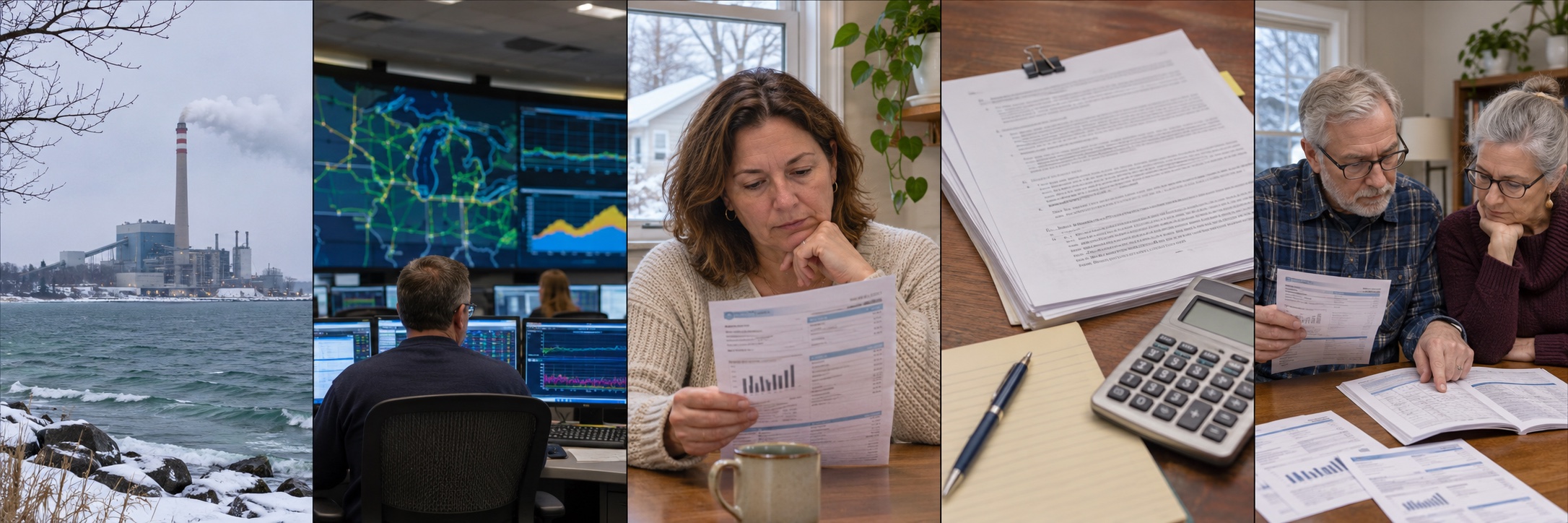
What “available to operate” means in the announcement
DOE says the order requires the plant to remain available for emergency needs. Availability is not the same as running at full output every hour. The plant’s dispatch depends on operating conditions and instructions from the grid operator. DOE also says economic dispatch is to be used to minimize costs; that does not state a guaranteed dollar saving for a specific household or prove that the plant will change a particular monthly bill.
The practical consumer question is often more specific: will a rate plan, utility tariff, bill credit or service reliability change? The DOE press release alone does not answer that for every customer. Retail plans and utility rates depend on state regulation, provider contracts, service territory and billing components. Keep the policy action distinct from an individual rate change unless the utility or regulator publishes a customer-specific notice.
Wholesale system actions and retail bills are different layers
Grid operators balance supply and demand and manage regional reliability. Retail bills are issued under a customer’s tariff or contract. A system operator’s dispatch can affect wholesale market outcomes, but how any market cost or benefit flows into a retail price depends on the market design and customer’s actual plan. Customers on a fixed-price contract generally should check the contract; customers on a variable or indexed plan should read its formula and provider notices. Do not infer a guaranteed lower price from the words “minimize costs” in an order.
The EIA’s Electric Power Monthly reported average residential prices for August 2026 in its October release, with a subsequent report scheduled for November 24. That national dataset is a historical, broad average—not a prediction of the DOE order’s effect and not the rate on a particular address. It covers different utilities, service areas and customer arrangements. A customer should use the current bill and applicable rate document for a personal comparison.
Which customers should monitor local updates
The order names the Campbell Plant in Michigan and MISO coordination, so customers in the broader region should check their own utility and state regulator for any applicable notices. The announcement does not establish that every Michigan customer is served by the same utility, that all Midwest states receive the same treatment, or that customers outside the region are directly affected. Service territories can cross city and county lines; the company named on the bill is the best starting point.
If your utility or state commission issues an official customer notice, compare it with the existing rate plan and effective date. For an actual bill question, check the service dates, kWh, price, fees, credits and meter reads. Ask the utility which specific tariff line changed and when. Retain the notice and a copy of both bills when you call.
What the announcement does not promise
DOE’s announcement does not announce a household rebate, instruct customers to switch providers, guarantee no outages, establish a new retail price, or say that every bill will fall. It also does not identify the electricity generation mix or local line reliability for every neighborhood. Those questions require other evidence, such as the utility’s service updates, a regulator’s rate filing, a current contract or a grid operator’s reliability report.
A headline may compress these distinctions. Read the order details and separate the source’s statement from a commentator’s forecast. If a story claims a precise bill saving, ask for the method, the affected customer class, the rate pass-through mechanism and the period. A regional policy action can be newsworthy without yielding a reliable personal savings figure.
How to check whether your own rate changed
Compare the current and previous bills for billing dates and days, kWh, variable supply charge, delivery charges, fixed customer fee, taxes, riders and any credits. Look for a rate-plan notice, contract renewal, seasonal pricing, fuel or purchased-power adjustment, or one-time charge. A longer billing period can raise total dollars even when daily usage is stable; compare kWh per day as well as the total.
If the provider’s price changed, compare the notice’s effective date to the meter-read period. A bill may include days before and after an effective date. Ask customer service which days were charged at each rate and where the calculation appears. BillMellow can compare figures you enter, but it cannot verify the provider’s tariff interpretation or resolve a billing dispute.
Use primary sources and revisit after the order expires
The current DOE release is the primary source for the order’s stated scope and dates. Regional operator materials and applicable commission or utility documents are needed to understand implementation and local retail effects. EIA provides broad statistics for context, not a direct order-impact calculation. Check the publication date and whether later revisions exist before citing any number.
Because the order is time-limited, a page that remains online after February 12, 2027 must not imply that the order is still in effect. Recheck whether DOE extended, replaced or ended it and revise the status line accordingly. For a current bill decision, use the latest provider tariff and written plan terms. Treat the article’s factual summary as time-stamped, and use the actual source when conditions change.
Will the order lower my electric bill?
The DOE announcement does not promise a specific household bill reduction. It directs availability and economic dispatch for a named plant during a specified period. Retail effects depend on local market and rate structures; check your utility or contract for customer-specific changes.
Does the order affect all Midwest states?
The announcement names the Campbell Plant in Michigan and coordination with MISO and Consumers Energy. It does not say every state or customer is affected the same way. Verify service area and any notice from your own provider or regulator.
Is the Campbell Plant running continuously?
The announcement says the plant must remain available to operate for emergency needs. Availability is not the same as running continuously at full output. Consult current operator information for actual dispatch.
Why cite EIA average prices?
EIA figures provide broad historical context for the residential sector. They are not a prediction or measurement of this order’s effect, and they are not a customer’s specific tariff.
How long is the order in effect?
DOE’s November 14 release states November 15, 2026 through February 12, 2027. Check for a later order or official update before relying on those dates.
All electricity guides · Compare plan costs · Methods and limits · Editorial standards