HOME ENERGY COSTS · BILLMELLOW GUIDE
Dehumidifier Electricity Cost: Estimate Hours and kWh
BillMellow Editorial · Updated November 6, 2026
Calculate dehumidifier energy cost from input watts, operating hours and your electric rate. Compare moisture removal, room conditions and ENERGY STAR efficiency.
The calculation
Measured kWh per day × variable $/kWh × days = estimated energy cost. Without a measurement, use input kW × active compressor hours; separate fan-only time where the model data allows.
Illustration: a dehumidifier drawing 500 W for 8 compressor-hours per day uses 4 kWh/day. At an assumed 18¢/kWh, that is 72¢ per day or $21.60 over 30 days. If it runs 14 hours, the estimate becomes $37.80. Humidity, temperature, drainage, control setting and actual cycling make runtime vary.
What makes a dehumidifier run longer
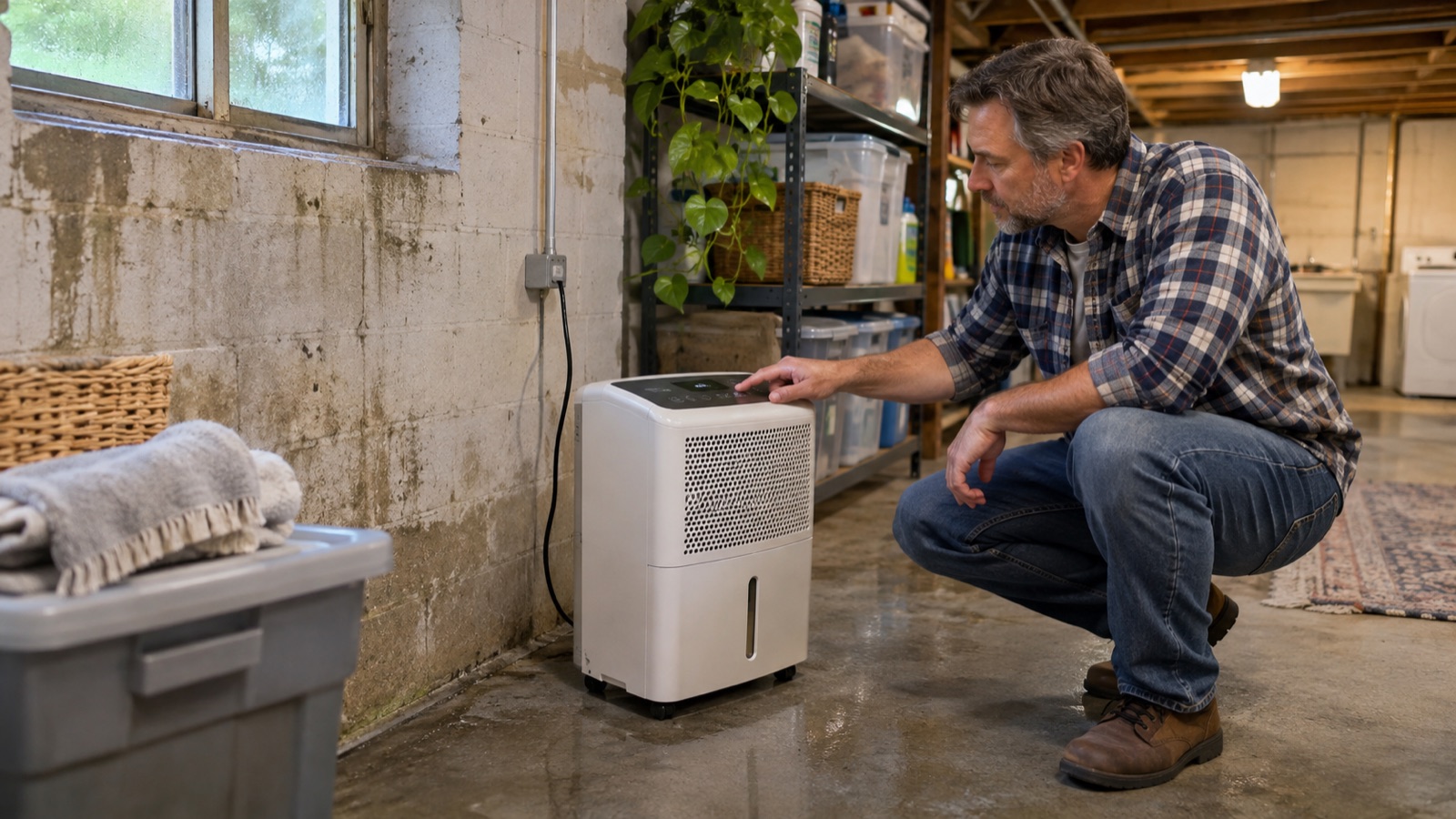
The unit removes moisture from air and runs its compressor until the humidity control is satisfied, then cycles as conditions change. A damp basement, open windows in humid weather, laundry drying indoors, leaks or poor ventilation can feed more moisture into the space. Fixing the moisture source may matter more than changing the unit’s setpoint.
Room temperature and the model’s operating range affect moisture removal and energy use. A small unit may run continuously in a large damp area, while a properly sized unit may cycle. Emptying a reservoir, using a continuous drain and ensuring airflow are practical details that affect reliable operation; follow the product manual.
Read capacity and efficiency separately
Pints per day is moisture-removal capacity, not electrical power. Look for input watts or an energy factor such as liters per kilowatt-hour on the exact model. ENERGY STAR says certified dehumidifiers remove the same amount of moisture while using about 20% less energy than similarly sized conventional models under program comparison criteria. Actual use still depends on conditions.
Choose capacity for the room and moisture load, not only the largest number available. Compare models at comparable test conditions and check operating temperature, defrost behavior, noise, tank capacity, drainage and filter maintenance. A certified unit can be a more efficient choice, but it will not solve a leak or structural water problem by itself.
Reduce the moisture load safely
Repair plumbing leaks and redirect water away from the foundation with qualified help. Use bathroom and kitchen exhaust ventilation as intended. Keep windows closed when outdoor air is humid, if it is safe and appropriate for ventilation. Clean the filter and leave manufacturer clearances. A dehumidifier should not replace professional remediation for mold, flooding or persistent water intrusion.
Select a humidity setting that balances comfort and building needs; the right target varies by climate and household. Avoid extremely low settings that cause unnecessary runtime. If the unit freezes, overheats or emits a burning smell, stop use and follow the manual or contact qualified service. Do not handle electrical equipment around standing water.
A practical checklist
- Use the model’s watts and compressor runtime; do not use pints/day as power.
- Check filters, drain, setpoint, room temperature and manufacturer clearances.
- Compare certified units of similar capacity under comparable conditions.
- Fix water intrusion or leaks instead of asking the appliance to handle the source.
- Account for heat released into an air-conditioned room when assessing whole-home use.
Frequently asked questions
How many hours should a dehumidifier run?
There is no universal runtime. Moisture load, room temperature, size, humidity setting, drainage and unit capacity all affect cycling. Track actual kWh and humidity for your conditions.
Does ENERGY STAR mean a dehumidifier will cost 20% less?
ENERGY STAR describes roughly 20% lower energy use than similarly sized conventional models under its criteria. Dollar savings depend on hours, local electricity price, model size and moisture conditions.
Should I leave a dehumidifier on continuously?
Follow the model’s manual, humidity control, drainage requirements and safety instructions. Continuous operation may be appropriate for some damp conditions but can waste energy or indicate an unresolved moisture problem.
Sources and limits
Linked sources provide the basis for this guide. Check them directly for current information, and contact the appropriate utility, agency, or manufacturer about your situation.
For more bill context, read how to read your electric bill or track monthly usage.