ELECTRICITY GUIDE
How Much Electricity Does an Aquarium Use?
BillMellow Editorial · Published November 7, 2026 · Updated November 10, 2026
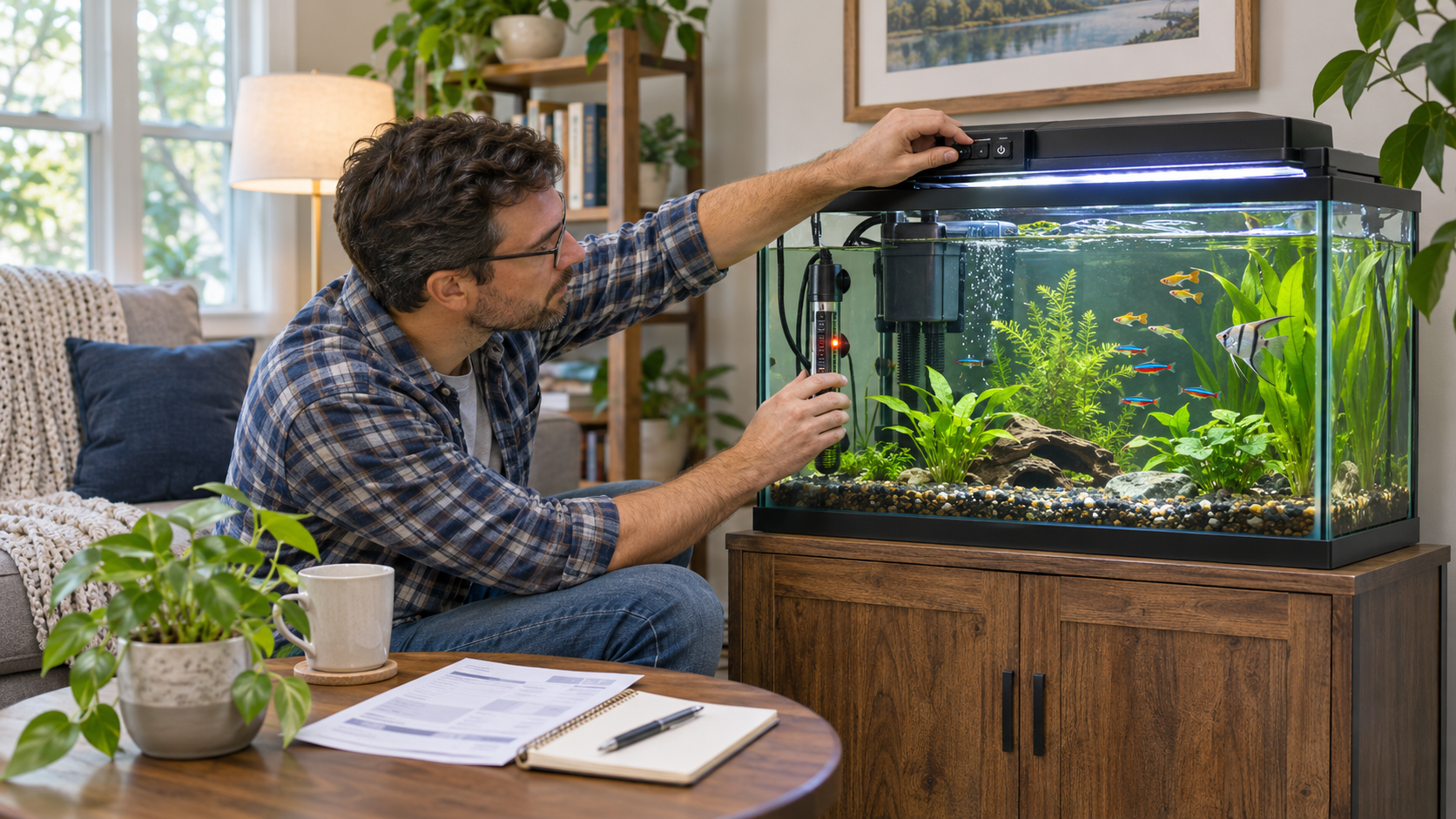
Estimate aquarium electricity costs by adding the heater, filter, lighting, and other equipment using each device’s input and realistic operating hours.
Estimate an appliance's electricity cost
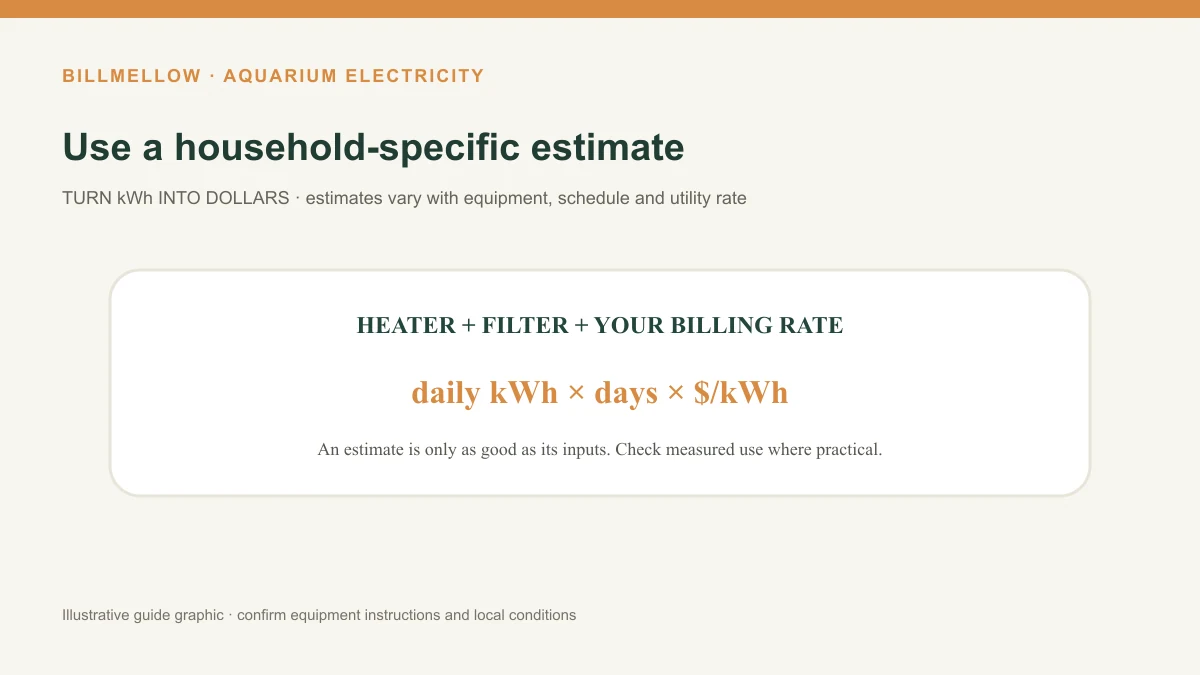
An aquarium’s electric cost is the sum of the equipment that runs over time: usually a heater, filter or circulation pump, lights, and sometimes an air pump or chiller. The tank’s heater label shows its maximum input while energized; it does not tell you how many hours the heater runs each day. For a useful estimate, separate the devices, measure or estimate their real operating time, and use the electricity rate on your own bill.
Quick estimate
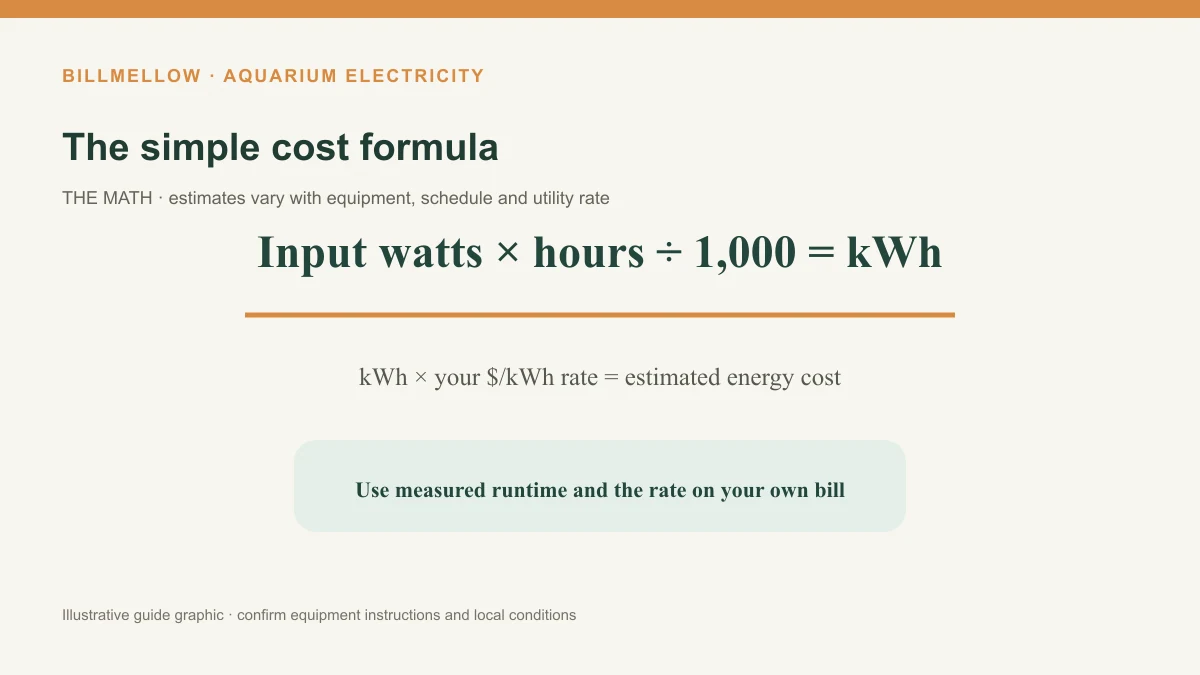
For a device that draws a steady amount of power, use: watts × hours used ÷ 1,000 = kilowatt-hours (kWh). Multiply kWh by your electricity price in dollars per kWh to estimate the energy charge. If a 200-watt heater is energized for a total of 10 hours in a day, that scenario uses 2 kWh. At an illustrative rate of 18 cents per kWh, that is $0.36 per day, or $10.80 over 30 days. These inputs are an example, not a claim about a typical aquarium. Replace them with your equipment, runtime, and bill rate.
Why the heater label is not the monthly answer
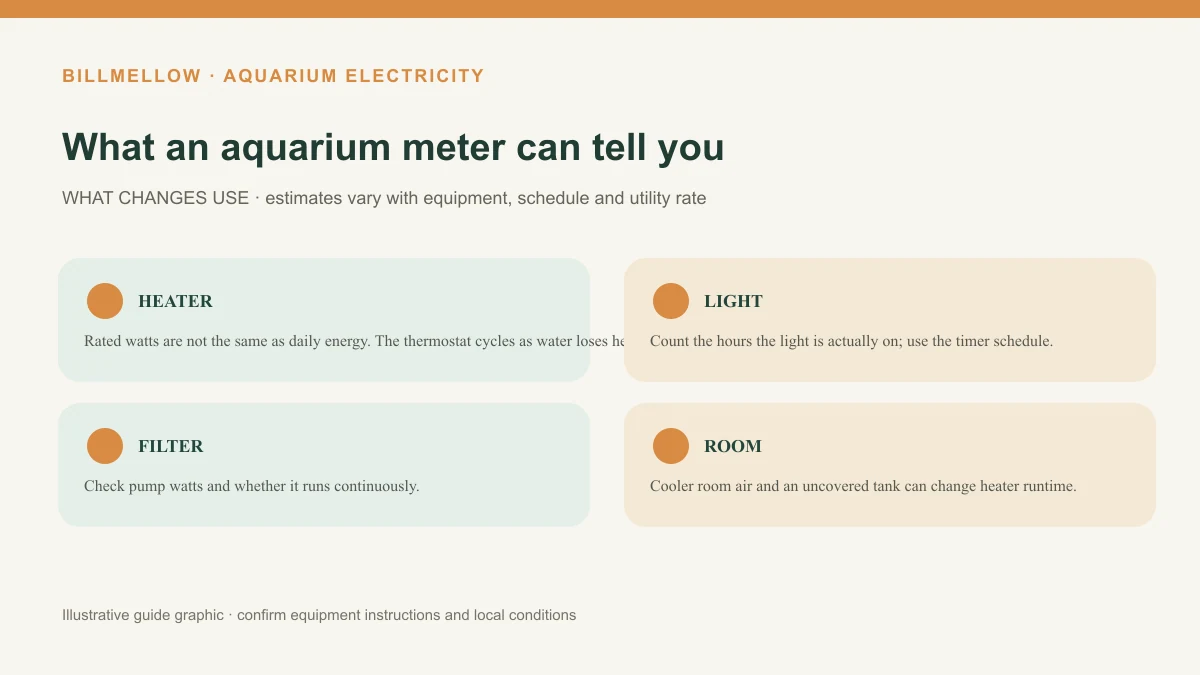
A thermostat switches the heater on and off to maintain the set temperature. Daily energy depends on the time it is actually heating, which changes with room temperature, tank size and shape, target temperature, lid fit, water movement, and heat loss from the glass. A 200-watt heater that runs for three total hours is different from the same heater running for ten hours. The printed rating is a useful upper input for a simple scenario, not a measurement of its daily energy.
Room conditions matter because the aquarium exchanges heat with its surroundings. A tank near a drafty window or an exterior wall can lose heat differently from one in a stable interior room. Seasonal changes can shift heater runtime even if the thermostat setting and stocking stay the same. A fitted lid may reduce evaporation and heat loss, but use a design appropriate to the species and equipment; keep ventilation and manufacturer clearances in mind. Do not cover ventilation openings or place materials near hot lights.
Add equipment one device at a time
List the devices that use electricity and note their wattage, schedule, and whether they run continuously or cycle. A filter rated at 18 watts running all day has a different pattern from a heater that switches on intermittently. Lights may have a timer. An air pump or chiller may follow its own schedule. Avoid adding the wattage of every device and multiplying by 24 hours unless all of them really draw that amount continuously; that shortcut can overstate use.
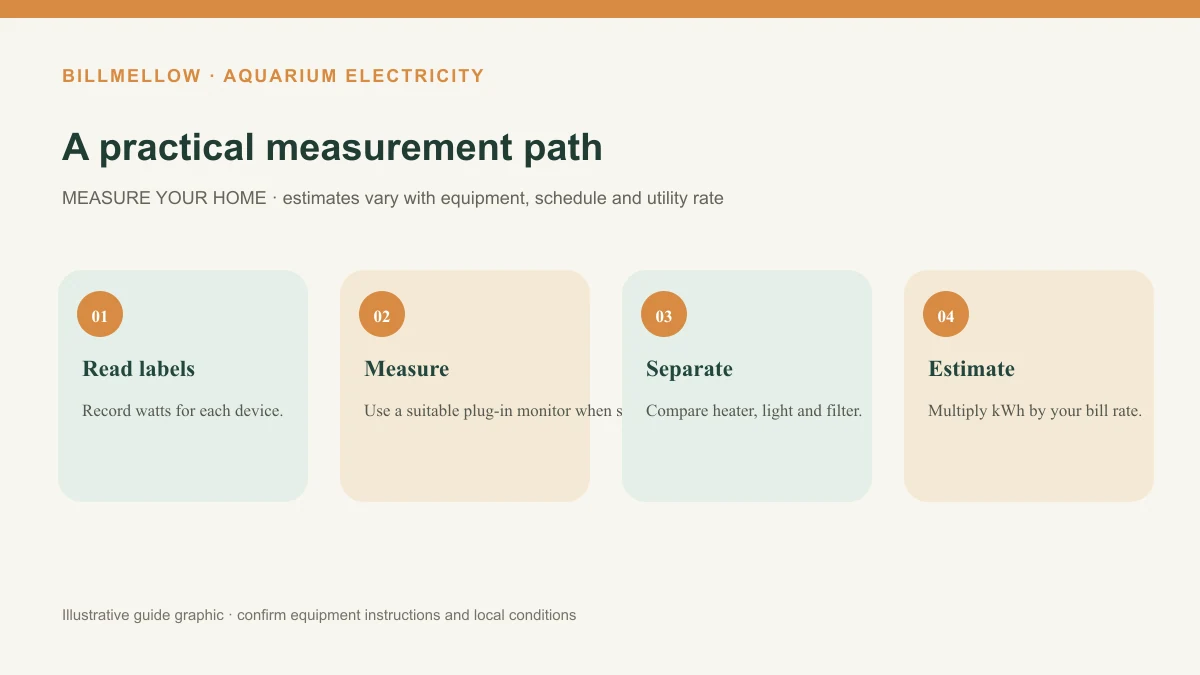
If the rating is in amps rather than watts, the estimate needs voltage and may still be approximate for equipment with motors or electronic controls. Prefer the manufacturer’s electrical input rating, a documented energy figure, or a suitable plug-in energy monitor. Never use a meter with aquarium equipment unless it is rated for the outlet, load, location, and moisture conditions. Keep connections dry and elevated as directed by the equipment maker, use a GFCI-protected outlet where required, and do not handle plugs with wet hands.
Measure without disturbing the tank
A plug-in monitor can capture many small devices if it is compatible with their electrical load and used in a dry, safe location. Measure a representative period that includes normal feeding, lighting, and room conditions. A short test during an unusually cold week or immediately after a water change may not represent an average month. If you cannot safely meter the equipment, record model numbers and schedules and treat the result as a range rather than a precise bill forecast.
For a whole-home comparison, take the electric meter or utility portal reading at the start and end of a stable period, then compare it with aquarium equipment schedules. That method also includes other household loads, so it cannot isolate the aquarium by itself. A dedicated circuit monitor or individual compatible meter is more useful for separating the tank from the rest of the home.
Turn a measured result into a monthly estimate
If a monitor reports 0.42 kWh per day for the tank, multiply 0.42 by the number of days in the period and by your rate. At 30 days and 18 cents per kWh, the illustrative calculation is 0.42 × 30 × $0.18 = $2.27. Your bill may have delivery charges, taxes, fixed fees, time-of-use prices, or tiered rates, so the marginal price for another kWh may differ from the average total bill divided by kWh. Use the relevant per-kWh charges from your tariff or bill for a closer estimate.
Keep a simple log with the date, meter reading, room temperature, thermostat setting, light schedule, and unusual events such as maintenance or a heater replacement. Compare periods with similar conditions. If aquarium use looks higher, first check whether the schedule changed, whether the heater is cycling more often, or whether another device was added. Do not lower a tank temperature or change filtration just to meet an electricity target if that could harm the animals or water quality.
When a change deserves attention
A sudden increase can come from colder room conditions, a thermostat or heater problem, a failing pump, a timer that reset, or a household billing change unrelated to the aquarium. If equipment is hot, noisy, leaking, repeatedly tripping a breaker, or behaving differently, follow the manufacturer’s instructions and have electrical or aquarium equipment inspected by a qualified professional. Do not bypass a thermostat, safety switch, GFCI, or grounding feature. Equipment reliability and healthy water conditions take priority over a small modeled saving.
For a broader home comparison, use BillMellow’s appliance electricity guide and electric bill comparison. The U.S. Department of Energy explains that electricity use over time is measured in kilowatt-hours in its Electricity 101 guide. The calculation above estimates energy cost; it is not a diagnosis of aquarium equipment or a substitute for the utility’s bill.
All electricity guides · Compare plan costs · Methods and limits · Editorial standards